English
 Español
 tiếng việt
 русский
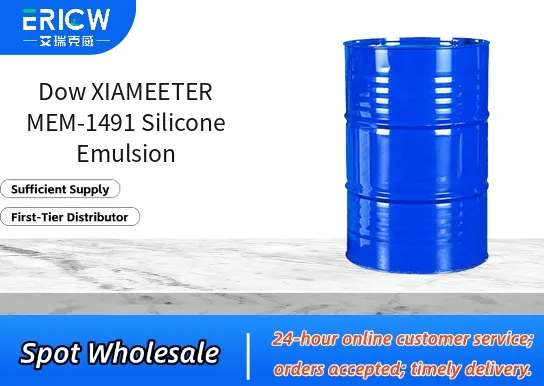
Highly stable anionic silicone emulsion with excellent shelf life under standard storage conditions.
Provides superior surface lubricity and slip enhancement in aqueous coating and treatment formulations.
Compatible with a broad range of water-based polymers, including acrylics, styrene-butadiene, and vinyl acetate copolymers.
Enables efficient migration to substrate surfaces without compromising film integrity or adhesion.
Low foaming profile suitable for high-shear processing and industrial roll-coating applications.
Textile finishing for soft hand feel, wrinkle resistance, and seam glide improvement.
Paper and board coatings to enhance surface smoothness, printability, and anti-blocking performance.
Leather finishing agents for improved grain flexibility and tactile softness.
Water-based inks and overprint varnishes to reduce friction and improve rub resistance.
Nonwoven fabric treatments for hydrophobicity control and process lubrication.
| Chemical Type | Dimethyl silicone polymer emulsion (anionic) |
| Product Form | Aqueous emulsion |
| Appearance | Opaque white liquid |
| pH (1% aqueous solution) | 6.0 – 7.5 |
| Solids Content (wt%) | 30 ± 1 |
| Viscosity (mPa·s, Brookfield RVT, spindle #3, 20 rpm, 25°C) | 200 – 800 |
| Particle Size (D50, nm) | 150 – 300 |
| Freeze-Thaw Stability | Stable after one cycle (-12°C for 16 h / 25°C for 8 h) |
Q1: What is the primary function of MEM-1491 in industrial formulations?
A: MEM-1491 is a stable anionic silicone emulsion designed to provide surface modification, lubricity, and anti-foaming performance in water-based systems—commonly used in textile auxiliaries, agrochemical adjuvants, and coatings where silicone functionality is needed without solvent use.
Q2: Is MEM-1491 compatible with cationic or high-salt formulations?
A: Due to its anionic nature, MEM-1491 may experience reduced stability or phase separation when directly mixed with strongly cationic agents or high concentrations of multivalent salts. Compatibility should be verified through small-scale testing under intended formulation conditions.
Q3: How should MEM-1491 be incorporated into a formulation to ensure optimal performance?
A: It is recommended to add MEM-1491 during the final stage of aqueous formulation, after pH adjustment and addition of major components. Gentle agitation is sufficient—avoid high-shear mixing that could destabilize the emulsion. Dosage typically depends on application requirements but generally ranges from 0.1% to 2% by weight of the total formulation.
Q4: Does MEM-1491 require special storage conditions?
A: Yes—store in original sealed containers at temperatures between 5°C and 35°C, away from freezing and prolonged exposure to direct sunlight. Avoid contamination and ensure lids are tightly closed after each use to maintain emulsion integrity and shelf life.
Contact With Us:
E-mail: wangxingqiang@ericwchem.com
Have a Questions? Call Us:
Add:
Building A1, Jiete Industrial Park, Huangpu District, Guangzhou City, Guangdong Province, China