English
 Español
 tiếng việt
 русский
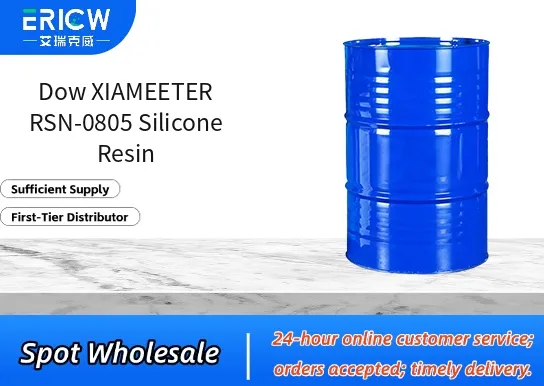
High thermal stability with continuous service up to 200 °C.
Excellent electrical insulation properties across wide temperature and frequency ranges.
Good compatibility with organic resins and pigments for hybrid formulation flexibility.
Low surface energy enabling superior water repellency and release performance.
Solvent-based liquid format for easy handling, dilution, and integration into existing coating processes.
Heat-resistant coatings for industrial ovens and exhaust systems.
Electrical insulating varnishes for motors, transformers, and coil windings.
Release agents for high-temperature composite molding and silicone rubber tooling.
Hybrid binder in ceramic and metal matrix composites requiring thermal durability.
Surface modifier for protective topcoats on aerospace and automotive substrates.
| Chemical Type | Methyl-phenyl silicone resin |
| Product Form | Liquid (solvent-based) |
| Appearance | Clear, colorless to pale yellow viscous liquid |
| Solvent System | Aromatic hydrocarbon blend |
| Non-Volatile Content | 50 ± 2 wt% |
| Viscosity (25 °C) | 800–1200 mPa·s |
| Density (25 °C) | 0.92–0.96 g/cm³ |
| Flash Point (COC) | 45–50 °C |
Q1: What is the primary function of Dow XIAMEETER RSN-0805 in coating formulations?
A: Dow XIAMEETER RSN-0805 is a methyl-phenyl silicone resin designed to enhance thermal stability, weather resistance, and surface hardness in high-performance industrial coatings—particularly for metal substrates exposed to elevated temperatures or harsh outdoor environments.
Q2: Is RSN-0805 compatible with organic resin systems such as acrylics or polyesters?
A: Yes, RSN-0805 exhibits good compatibility with many thermosetting organic resins—including acrylics, alkyds, and polyester-based systems—when properly dispersed and formulated. Compatibility testing under actual processing conditions is recommended to confirm homogeneity and performance stability.
Q3: How is RSN-0805 typically incorporated into a formulation?
A: It is commonly added during the let-down or post-addition stage using high-shear mixing. Pre-dilution in compatible solvents (e.g., xylene, butyl acetate, or aromatic hydrocarbons) may improve dispersion. Final dosage generally ranges from 0.1% to 2% by weight of total formulation, depending on desired performance enhancement.
Q4: Does RSN-0805 require heat curing to develop its full properties?
A: While it contributes functionality at ambient temperature, optimal crosslinking and maximum thermal/chemical resistance are achieved through thermal cure—typically above 150 °C. The extent of property development depends on cure time, temperature profile, and co-resin system.
Contact With Us:
E-mail: wangxingqiang@ericwchem.com
Have a Questions? Call Us:
Add:
Building A1, Jiete Industrial Park, Huangpu District, Guangzhou City, Guangdong Province, China