English
 Español
 tiếng việt
 русский
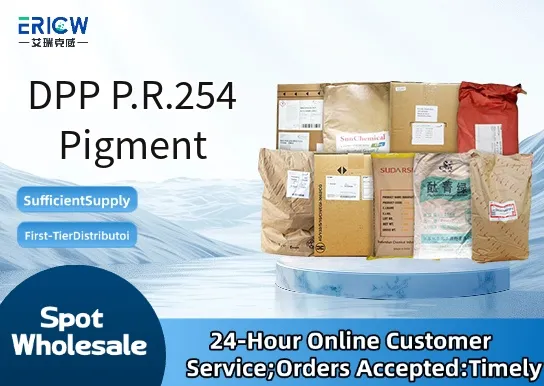
High color strength and excellent chroma in both organic and aqueous systems.
Outstanding thermal stability up to 280°C, suitable for high-temperature processing.
Good lightfastness (ASTM Level 7–8) and weather resistance in exterior applications.
Excellent dispersibility in common polymer matrices including PVC, PS, and ABS.
Low migration tendency and superior bleed resistance in plastic and ink formulations.
Automotive interior and exterior plastic components (e.g., dashboards, bumpers).
High-performance industrial coatings for metal and plastic substrates.
Packaging inks for flexible films and laminated structures.
Engineering thermoplastics requiring long-term color retention under UV exposure.
Specialty masterbatches for demanding OEM specifications.
| Chemical Type | Diketopyrrolopyrrole (DPP) derivative |
| Product Form | Free-flowing fine powder |
| Appearance | Brilliant red to scarlet shade |
| Primary Applications | Plastics, coatings, and packaging inks |
| Key Features | High tinctorial strength, thermal stability, low migration |
| Benefits | Consistent batch-to-batch color, easy dispersion, regulatory compliance support |
| Recommended Carrier | Non-polar resins or polyethylene wax |
| Storage Conditions | Store in cool, dry place; avoid direct sunlight and moisture |
Q1: What is the primary chemical class and typical application profile of DPP P.R.254 pigment?
A: DPP P.R.254 is a diketopyrrolopyrrole (DPP) derivative, classified as a high-performance organic red pigment. It is widely used in demanding applications requiring excellent lightfastness, heat stability, and color strength—particularly in automotive coatings, industrial finishes, and high-end plastics.
Q2: Is DPP P.R.254 suitable for use in food-contact or pharmaceutical packaging materials?
A: DPP P.R.254 is not pre-approved for direct food-contact applications under major global regulatory frameworks. Its suitability for packaging must be evaluated case-by-case, considering migration potential, final formulation composition, and applicable local regulations. Customers are advised to conduct full regulatory due diligence and obtain appropriate certifications before use in such applications.
Q3: How does DPP P.R.254 perform under high-temperature processing conditions, such as injection molding or extrusion?
A: This pigment exhibits good thermal stability and is generally compatible with standard polymer processing temperatures up to approximately 280–300 °C, depending on residence time and resin matrix. Performance may vary across polyolefins, engineering plastics, and thermosets—preliminary compatibility testing is recommended for each specific process and formulation.
Q4: What dispersion methods are recommended to achieve optimal color development and stability?
A: Optimal dispersion is typically achieved using high-shear mixing equipment—such as three-roll mills, bead mills, or high-speed dispersers—in combination with compatible wetting and dispersing additives. The choice of dispersant should align with the carrier medium (e.g., polar solvents for coatings, polymeric dispersants for plastics), and stabilization is critical to prevent flocculation and maintain batch-to-batch consistency.
Contact With Us:
E-mail: wangxingqiang@ericwchem.com
Have a Questions? Call Us:
Add:
Building A1, Jiete Industrial Park, Huangpu District, Guangzhou City, Guangdong Province, China