English
 Español
 tiếng việt
 русский
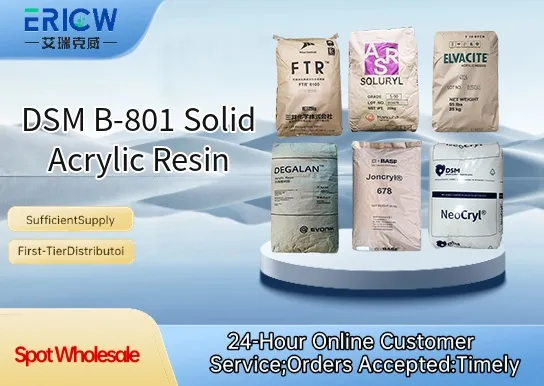
High molecular weight thermoplastic acrylic polymer offering excellent clarity and gloss retention.
Outstanding UV resistance and weatherability for long-term outdoor performance.
Good thermal stability with softening point above 100 °C, suitable for high-temperature processing.
Excellent compatibility with common plasticizers, impact modifiers, and other thermoplastic resins.
Low volatile organic compound (VOC) content, supporting sustainable coating and compound formulations.
Automotive clearcoats and topcoats requiring high durability and optical clarity.
Architectural coatings for exterior metal and concrete substrates.
Plastic compounding for transparent engineering parts and light-diffusing components.
High-performance inks for flexible packaging and premium labeling.
Adhesive modifiers to enhance cohesion and aging resistance in pressure-sensitive systems.
| Chemical Type | Thermoplastic solid acrylic copolymer |
| Product Form | Pale yellow to colorless granules or powder |
| Appearance | Free-flowing, non-hygroscopic solid |
| Softening Point (°C) | 105–115 (DSC, 10 °C/min) |
| Molecular Weight (Mw) | 120,000–160,000 g/mol (GPC, PMMA standard) |
| Volatile Content (% w/w) | < 0.5% (120 °C, 2 h) |
| Acid Number (mg KOH/g) | < 5 |
| Key Features | UV-stable, thermally robust, low-VOC, high-clarity |
Q1: What is the primary function of DSM B-801 in coating and ink formulations?
A: DSM B-801 functions as a high-performance film-forming binder and rheology modifier, enhancing gloss, hardness, and substrate adhesion while supporting excellent clarity and UV stability in solvent-based and high-solids systems.
Q2: Is DSM B-801 suitable for food-contact applications?
A: DSM B-801 is designed for industrial and decorative applications; it is not pre-approved for direct food-contact use. Formulators must conduct full regulatory evaluation—including migration testing and compliance verification—based on final formulation, processing conditions, and applicable regional requirements.
Q3: How does DSM B-801 compare to conventional acrylic resins in terms of solubility and compatibility?
A: DSM B-801 exhibits broad solubility in common organic solvents (e.g., esters, ketones, aromatic hydrocarbons) and demonstrates good compatibility with other acrylics, alkyds, cellulose derivatives, and select epoxy-modified systems—enabling flexible formulation design without significant phase separation risks.
Q4: What are typical handling and storage recommendations for DSM B-801?
A: Store in original sealed containers in a cool, dry, well-ventilated area away from direct sunlight and ignition sources. Avoid prolonged exposure to moisture or elevated temperatures during storage, as this may affect flow properties or increase viscosity over time.
Q5: Can DSM B-801 be used in high-gloss automotive refinish coatings?
A: Yes—DSM B-801 is frequently selected in premium refinish and OEM-compatible topcoats where exceptional clarity, depth of gloss, and resistance to yellowing under UV exposure are critical performance requirements.
Contact With Us:
E-mail: wangxingqiang@ericwchem.com
Have a Questions? Call Us:
Add:
Building A1, Jiete Industrial Park, Huangpu District, Guangzhou City, Guangdong Province, China