English
 Español
 tiếng việt
 русский
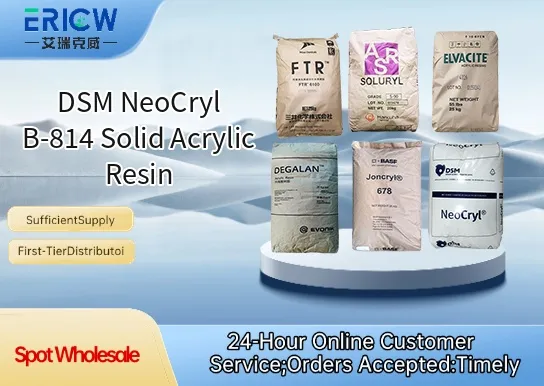
High molecular weight solid acrylic resin offering excellent film hardness and scratch resistance.
Low yellowing tendency with superior UV stability for long-term outdoor performance.
Good compatibility with common crosslinkers including melamine, urea, and isocyanate systems.
Excellent solubility in aromatic and ketonic solvents (e.g., xylene, MEK, MIBK).
Consistent batch-to-batch reproducibility and low volatile organic content (VOC-free in final formulation).
Automotive OEM and refinish topcoats requiring high gloss and durability.
Industrial maintenance coatings for metal substrates in architectural and infrastructure settings.
High-performance coil coatings for pre-painted metal applications.
Powder coating binders where enhanced flow, leveling, and mechanical properties are critical.
| Chemical Type | Thermoplastic solid acrylic copolymer |
| Product Form | Free-flowing white to off-white granular solid |
| Appearance | Granular, non-dusting, homogeneous particles |
| Glass Transition Temperature (Tg) | ~75–78 °C (DSC, 10 °C/min) |
| Molecular Weight (Mw) | ~150,000–180,000 g/mol (GPC, PMMA standard) |
| Acid Value | 5–10 mg KOH/g |
| Solubility | Readily soluble in xylene, toluene, MEK, MIBK, and acetone |
| Storage Stability | Stable ≥24 months at <30 °C in original sealed packaging |
Q1: What is the primary function of NeoCryl B-814 in coating formulations?
A: NeoCryl B-814 is a solid acrylic resin designed primarily as a film-forming binder and rheology modifier in high-solids, low-VOC architectural and industrial coatings. It contributes to improved scrub resistance, gloss retention, and substrate adhesion without requiring high levels of coalescing agents.
Q2: Is NeoCryl B-814 compatible with common waterborne acrylic emulsions and polyurethane dispersions?
A: Yes, NeoCryl B-814 demonstrates good compatibility with a broad range of waterborne acrylic emulsions, styrene-acrylic hybrids, and aliphatic polyurethane dispersions. Compatibility should be verified experimentally in final formulations due to sensitivity to pH, ionic strength, and surfactant systems.
Q3: How is NeoCryl B-814 typically incorporated into aqueous systems?
A: It is generally dispersed into water or pre-diluted latex using high-shear mixing at ambient temperature. Pre-wetting with a small amount of water or co-solvent may aid dispersion. Avoid prolonged high-temperature exposure during incorporation to prevent premature agglomeration.
Q4: Does NeoCryl B-814 require special handling or storage conditions?
A: Store in original sealed packaging in a cool, dry place away from direct sunlight and moisture. Prolonged exposure to humidity may cause caking or reduced dispersibility. Once opened, minimize air exposure and use within recommended shelf life under controlled conditions.
Contact With Us:
E-mail: wangxingqiang@ericwchem.com
Have a Questions? Call Us:
Add:
Building A1, Jiete Industrial Park, Huangpu District, Guangzhou City, Guangdong Province, China