English
 Español
 tiếng việt
 русский
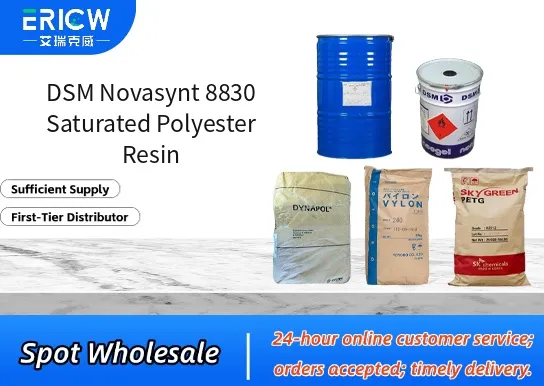
Highly stable aliphatic saturated polyester structure ensuring excellent UV resistance and long-term color retention.
Low viscosity for easy handling, solvent-free formulation compatibility, and improved mixing efficiency in coating systems.
Outstanding hydrolytic stability and chemical resistance, particularly against weak acids, alkalis, and household cleaners.
Designed for ambient or low-bake curing with standard amino crosslinkers (e.g., melamine-formaldehyde), enabling energy-efficient processing.
Consistent batch-to-batch reproducibility and low volatile organic compound (VOC) content, supporting sustainable manufacturing compliance.
Premium coil coatings for architectural and industrial metal substrates requiring weather durability and gloss retention.
High-performance can coatings for food and beverage containers, meeting stringent regulatory requirements for migration safety.
Appliance coatings for refrigerators, washing machines, and ovens where hardness, scratch resistance, and cleanability are critical.
General-purpose metal finishing coatings for outdoor furniture, HVAC components, and agricultural equipment.
Base resin for high-gloss, low-yellowing topcoats in powder and liquid baking enamel systems.
| Chemical Type | Aliphatic saturated polyester |
| Product Form | Clear to pale yellow viscous liquid |
| Appearance | Homogeneous, transparent, free of sediment or haze |
| Primary Applications | Coil coatings, can coatings, appliance coatings, metal packaging |
| Key Features | UV stability, hydrolytic resistance, low yellowing, amino-curable |
| Benefits | Long service life, consistent film formation, low VOC, regulatory-compliant |
| Storage Conditions | Store in tightly closed containers at 15–25°C; protect from freezing and direct sunlight |
| Shelf Life | 12 months from date of manufacture under recommended storage conditions |
Q1: What is the primary function of Novasynt 8830 in coating formulations?
A: Novasynt 8830 functions as a high-performance saturated polyester resin designed to serve as a key binder component in thermosetting coil and can coatings. It contributes excellent gloss retention, hardness development, and resistance to mechanical deformation during forming operations.
Q2: Is Novasynt 8830 compatible with common crosslinkers used in industrial baking systems?
A: Yes — Novasynt 8830 is formulated for compatibility with standard amino crosslinkers such as melamine-formaldehyde resins. Its hydroxyl functionality enables efficient co-reactivity under typical cure conditions (e.g., 200–230 °C), delivering robust network formation and film integrity.
Q3: How does Novasynt 8830 support compliance with food-contact requirements for metal packaging?
A: Novasynt 8830 is manufactured using raw materials selected for suitability in food-contact applications. While final regulatory compliance depends on the complete formulation and processing conditions, the resin itself is intended for use in coatings complying with general food-contact guidelines for coated metals.
Q4: What solvent systems is Novasynt 8830 typically supplied in, and how should it be handled?
A: Novasynt 8830 is commonly supplied in aromatic or aromatic-aliphatic solvent blends to ensure optimal viscosity and stability. It should be stored in tightly sealed containers under cool, dry conditions, away from direct sunlight and excessive heat to maintain shelf life and performance consistency.
Q5: Can Novasynt 8830 be blended with other resin types to modify film properties?
A: Yes — Novasynt 8830 demonstrates good compatibility with select acrylics, alkyds, and other saturated polyesters when used to fine-tune flexibility, cure response, or surface appearance. Compatibility testing is recommended for each specific blend ratio and end-use requirement.
Contact With Us:
E-mail: wangxingqiang@ericwchem.com
Have a Questions? Call Us:
Add:
Building A1, Jiete Industrial Park, Huangpu District, Guangzhou City, Guangdong Province, China