English
 Español
 tiếng việt
 русский
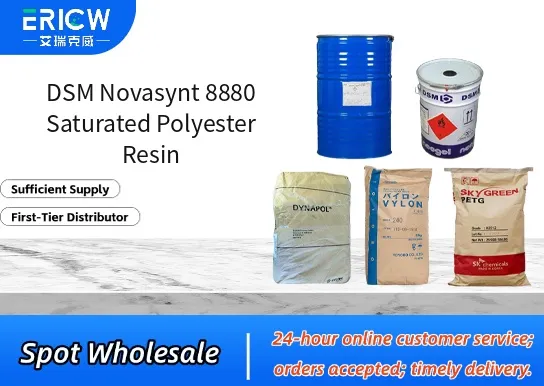
Highly consistent batch-to-batch reproducibility for reliable coating performance.
Excellent hydrolytic stability, enabling extended shelf life and reduced formulation sensitivity to moisture.
Optimized acid value and molecular weight distribution for balanced reactivity and film formation.
Low volatile organic compound (VOC) content, supporting compliance with stringent environmental regulations.
Good compatibility with common amino crosslinkers (e.g., melamine-formaldehyde) in thermosetting coatings.
Automotive OEM clearcoats and basecoat/clearcoat systems.
Industrial coil coatings for pre-painted metal (PPM) applications.
Appliance coatings requiring high gloss, hardness, and chemical resistance.
General-purpose high-performance thermoset topcoats for metal substrates.
| Chemical Type | Saturated polyester resin (carboxyl-functional) |
| Product Form | Clear to pale yellow viscous liquid |
| Appearance | Homogeneous, transparent, free from gel or sediment |
| Acid Value (mg KOH/g) | 24–28 |
| Hydroxyl Value (mg KOH/g) | 12–16 |
| Viscosity @ 25°C (mPa·s) | 3,500–5,500 |
| Solids Content (% w/w) | 60–64 (in xylene/butyl acetate blend) |
| Density @ 25°C (g/cm³) | 1.08–1.12 |
Q1: What are the primary application areas for Novasynt 8880?
A: Novasynt 8880 is primarily formulated into high-performance powder coatings for architectural aluminum, industrial metal furniture, and outdoor equipment where excellent weather resistance, mechanical durability, and smooth film formation are required.
Q2: How does Novasynt 8880 differ from unsaturated polyester resins in powder coating systems?
A: Unlike unsaturated polyesters, Novasynt 8880 contains no reactive double bonds and therefore does not require free-radical curing agents. It cures via acid–epoxy crosslinking, offering improved storage stability, reduced yellowing during curing, and enhanced UV resistance in the final coating.
Q3: Which crosslinkers are typically used with Novasynt 8880?
A: Novasynt 8880 is designed to be compatible with standard glycidyl-functional crosslinkers, especially triglycidyl isocyanurate (TGIC) and hydroxyalkyl amide (HAA) types. Selection depends on regulatory requirements, cure schedule, and performance targets such as flexibility or overbake resistance.
Q4: What is the recommended processing temperature range for extruding Novasynt 8880-based formulations?
A: Extrusion should be carried out below the resin’s softening point to avoid premature reaction or degradation — typically within a melt zone temperature range of 60–90 °C, depending on formulation composition and equipment configuration.
Q5: Is Novasynt 8880 suitable for low-cure or energy-efficient powder coating applications?
A: Yes — when paired with optimized crosslinkers and catalysts, Novasynt 8880 enables robust film formation at reduced cure temperatures (e.g., 160–180 °C), supporting sustainability goals without compromising key performance attributes like hardness or chemical resistance.
Contact With Us:
E-mail: wangxingqiang@ericwchem.com
Have a Questions? Call Us:
Add:
Building A1, Jiete Industrial Park, Huangpu District, Guangzhou City, Guangdong Province, China