English
 Español
 tiếng việt
 русский
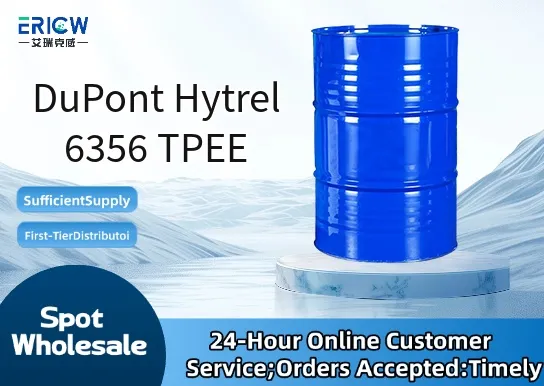
Excellent balance of thermoplastic processability and elastomeric performance.
High tensile strength and outstanding fatigue resistance for dynamic applications.
Good resistance to oils, greases, and many common industrial chemicals.
Broad service temperature range from –40 °C to +120 °C (short-term).
Outstanding creep resistance and dimensional stability under load.
Automotive air ducts and HVAC components requiring vibration damping and thermal stability.
Power tool grips and ergonomic housings demanding high impact strength and tactile feel.
Industrial conveyor belts and timing belt teeth requiring wear resistance and flex life.
Medical device tubing and connectors requiring biocompatibility (ISO 10993-compliant grades available) and kink resistance.
Consumer electronics casings and flexible hinges requiring precision molding and long-term resilience.
| Chemical Type | Thermoplastic Elastomer (TPEE) — Polyester-based |
| Product Form | Natural pellets |
| Appearance | Off-white, semi-crystalline granules |
| Primary Applications | Dynamic structural parts, flexible couplings, sealing elements |
| Key Features | High modulus, excellent rebound, low compression set |
| Processing Method | Injection molding, extrusion, blow molding |
| Drying Requirement | Recommended: 4–6 hours at 120 °C (hot-air dryer) |
| Regulatory Compliance | RoHS compliant; FDA-compliant grades available upon request |
Q1: What distinguishes Hytrel 6356 from other TPEE grades in the Hytrel portfolio?
A: Hytrel 6356 is a medium-hardness thermoplastic elastomer engineered for an optimal balance of flexibility, dynamic fatigue resistance, and high-temperature performance. It offers greater toughness and melt processability compared to higher-hardness grades like 7246, while providing improved recovery and creep resistance versus softer, lower-melting variants such as 4056.
Q2: Is Hytrel 6356 suitable for applications requiring repeated flexing or cyclic loading?
A: Yes — Hytrel 6356 is specifically formulated for demanding dynamic applications. Its polyester-based thermoplastic elastomer structure delivers excellent resilience, low hysteresis, and superior resistance to mechanical fatigue, making it well-suited for components such as powertrain bushings, sporting goods hinges, and flexible couplings exposed to continuous bending or vibration.
Q3: Can Hytrel 6356 be processed using standard thermoplastic equipment?
A: Yes — Hytrel 6356 is fully compatible with conventional thermoplastic processing methods including injection molding, extrusion, and blow molding. It exhibits good melt stability and flow characteristics, and typical drying requirements align with standard TPEE handling: thorough desiccant drying at 120 °C for 2–4 hours prior to processing is recommended to maintain mechanical integrity.
Q4: How does Hytrel 6356 perform in contact with common automotive fluids and industrial oils?
A: Hytrel 6356 demonstrates good resistance to a broad range of non-polar and moderately polar fluids, including engine oils, transmission fluids, brake fluids (DOT 3/4), and many hydraulic oils. Performance may vary depending on temperature exposure duration and fluid composition; long-term immersion testing under application-specific conditions is advised for critical sealing or structural components.
Contact With Us:
E-mail: wangxingqiang@ericwchem.com
Have a Questions? Call Us:
Add:
Building A1, Jiete Industrial Park, Huangpu District, Guangzhou City, Guangdong Province, China