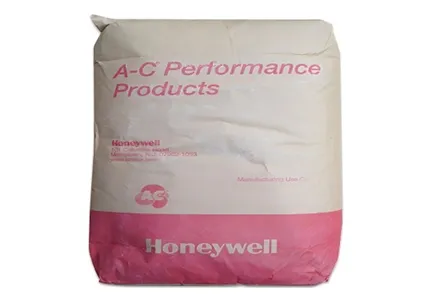
High acetate content (≈39.8% acetyl) for enhanced solubility in common organic solvents such as acetone, ethyl acetate, and methyl ethyl ketone.
Consistent molecular weight distribution ensuring predictable film-forming behavior and mechanical performance in coatings and films.
Excellent clarity and gloss retention, making it ideal for high-appearance optical and decorative applications.
Good thermal stability during extrusion and solution processing without premature degradation or yellowing.
Compatible with plasticizers (e.g., triethyl citrate, acetyl tributyl citrate) to tailor flexibility and impact resistance.
Transparent protective coatings for eyewear lenses, optical filters, and display overlays.
Base resin for premium-grade cigarette filter tow and filtration media requiring precise porosity and stiffness.
Biodegradable packaging films where clarity, printability, and compostability are required.
Adhesive components in pressure-sensitive tapes and labels demanding clean release and low extractables.
Binders in pharmaceutical tablet coatings for controlled dissolution and aesthetic finish.
| Chemical Type | Cellulose acetate homopolymer |
| Product Form | White to off-white granular solid |
| Appearance | Free-flowing, uniform granules |
| Acetyl Content | 39.5–40.1 wt% (nominal 39.8%) |
| Solubility | Soluble in acetone, MEK, ethyl acetate, dioxolane; insoluble in water and aliphatic hydrocarbons |
| Viscosity (10% w/v in acetone, 25°C) | 28–32 cP |
| Moisture Content (as received) | ≤4.0 wt% |
| Primary Applications | Coatings, filtration, packaging films, pharmaceuticals, adhesives |
Q1: What are the primary solvents recommended for dissolving Eastman CA 398-30?
A: Eastman CA 398-30 is readily soluble in common organic solvents such as acetone, methyl ethyl ketone (MEK), ethyl acetate, and chlorinated solvents like methylene chloride. It exhibits limited solubility in alcohols alone but may be co-dissolved with esters or ketones in mixed solvent systems.
Q2: How does the viscosity of Eastman CA 398-30 compare to other cellulose acetates in the Eastman CA series?
A: CA 398-30 is a medium-viscosity grade, positioned between lower-molecular-weight grades (e.g., CA 398-10) and higher-viscosity types (e.g., CA 398-50). Its solution viscosity supports good film-forming capability while maintaining manageable processing characteristics for coating and casting applications.
Q3: Is Eastman CA 398-30 suitable for use in food-contact coatings?
A: Yes — Eastman CA 398-30 is manufactured to meet applicable FDA requirements for indirect food contact when used in compliant formulations and processing conditions. Final regulatory compliance depends on full formulation composition, end-use conditions, and adherence to specified migration controls.
Q4: What is the typical role of CA 398-30 in ink and coating formulations?
A: In inks and coatings, CA 398-30 functions primarily as a film-forming binder that contributes gloss, flexibility, and substrate adhesion. It is often used at low concentrations alongside other resins to modify rheology, improve rub resistance, and enhance drying behavior without excessive brittleness.
Contact With Us:
E-mail: wangxingqiang@ericwchem.com
Have a Questions? Call Us:
Add:
Building A1, Jiete Industrial Park, Huangpu District, Guangzhou City, Guangdong Province, China
 English
 Español
 tiếng việt
 русский