English
 Español
 tiếng việt
 русский
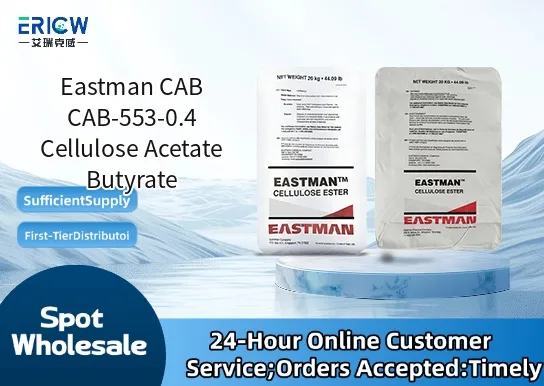
Excellent compatibility with a broad range of resins, plasticizers, and pigments—including acrylics, vinyls, and urethanes.
Low solution viscosity at high solids content, enabling efficient high-speed coating and spray application.
Outstanding UV stability and resistance to yellowing, supporting long-term outdoor durability.
Good flexibility and impact resistance without requiring additional plasticizers in many formulations.
Low moisture absorption compared to standard cellulose acetate, enhancing dimensional stability in humid environments.
Automotive clearcoats and basecoats for enhanced gloss, mar resistance, and film integrity.
Industrial maintenance coatings for metal and wood substrates requiring weatherability and chemical resistance.
Overprint varnishes and protective topcoats for flexible packaging and premium labels.
Tool handles, sporting goods, and consumer electronics housings requiring tough, non-yellowing thermoplastic films.
Adhesive modifiers and rheology control agents in pressure-sensitive and laminating adhesives.
| Chemical Type | Cellulose acetate butyrate (CAB) |
| Product Form | Pellets or flake |
| Appearance | White to off-white free-flowing solid |
| Butyryl Content (wt%) | ~24–26% |
| Acetyl Content (wt%) | ~15–17% |
| Hydroxyl Content (wt%) | ~2.0–2.8% |
| Typical Intrinsic Viscosity (dL/g) – 0.5% in TCB at 25°C | 0.40–0.46 |
| Primary Applications | Coatings, inks, adhesives, and thermoplastic compounds |
Contact With Us:
E-mail: wangxingqiang@ericwchem.com
Have a Questions? Call Us:
Add:
Building A1, Jiete Industrial Park, Huangpu District, Guangzhou City, Guangdong Province, China