English
 Español
 tiếng việt
 русский
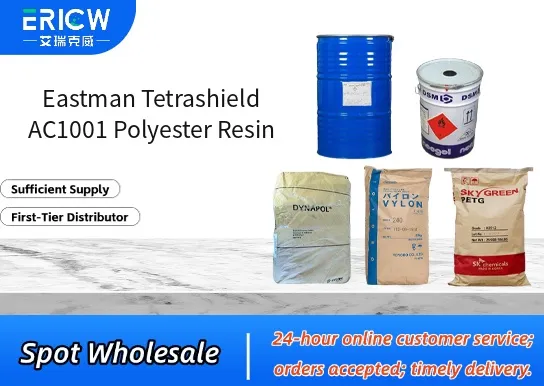
High-performance alkyd-modified unsaturated polyester resin offering excellent weatherability and UV resistance.
Optimized for low-VOC formulations without compromising cure speed or film hardness.
Superior compatibility with common reactive diluents, fillers, and pigment systems used in industrial coatings.
Delivers exceptional gloss retention and color stability after accelerated QUV and xenon-arc exposure testing.
Engineered for consistent batch-to-batch reproducibility and reliable processing in coil and can coating lines.
Premium coil coatings for architectural and appliance metal substrates.
High-durability can coatings for food and beverage containers.
Industrial maintenance coatings requiring long-term corrosion and chalk resistance.
Automotive OEM and refinish topcoats where gloss and weathering performance are critical.
General-purpose high-solids polyester-based protective coatings for metal fabrication.
| Chemical Type | Alkyd-modified unsaturated polyester resin |
| Product Form | Liquid, solvent-based solution |
| Appearance | Clear to pale yellow viscous liquid |
| Primary Applications | Coil coatings, can coatings, industrial maintenance coatings |
| Key Features | UV resistance, high gloss retention, low-VOC readiness, thermal stability |
| Recommended Cure Temperature Range | 220–250 °C (metal substrate) |
| Typical Solvent System | Xylene/toluene/ester blends (formulation-dependent) |
| Storage Stability | ≥12 months at 25 °C in sealed container |
Q1: What is the primary function of Eastman Tetrashield AC1001 in polyester resin systems?
A: Eastman Tetrashield AC1001 is a high-performance additive designed to enhance hydrolytic stability and long-term durability of unsaturated polyester resins, particularly in demanding outdoor or humid environments where moisture resistance is critical.
Q2: Is Eastman Tetrashield AC1001 compatible with standard free-radical curing systems?
A: Yes, it is fully compatible with conventional peroxide-initiated free-radical polymerization systems used in polyester resin processing, including MEKP and BPO initiators, without interfering with gel time or cure profile under typical formulation conditions.
Q3: How should Eastman Tetrashield AC1001 be incorporated into a polyester resin formulation?
A: It is typically added during the late-stage mixing phase—after pigment and filler dispersion but before catalyst addition—to ensure uniform distribution. Pre-dilution in a small portion of the base resin is recommended for optimal homogeneity.
Q4: Does Eastman Tetrashield AC1001 affect the viscosity or pot life of polyester resin formulations?
A: At recommended use levels, it has minimal impact on initial viscosity and does not significantly shorten pot life. Any observable effect remains within acceptable ranges for standard laminating, casting, or pultrusion processes.
Contact With Us:
E-mail: wangxingqiang@ericwchem.com
Have a Questions? Call Us:
Add:
Building A1, Jiete Industrial Park, Huangpu District, Guangzhou City, Guangdong Province, China