English
 Español
 tiếng việt
 русский
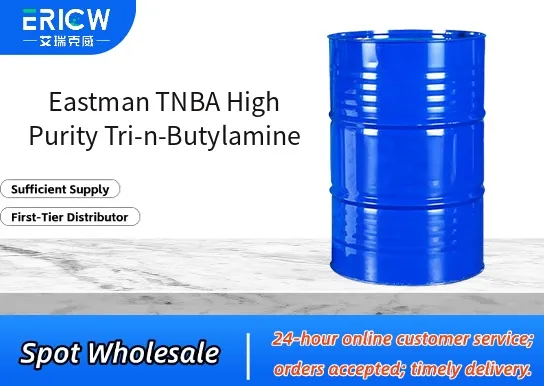
Ultra-high purity (>99.5% GC assay) minimizes impurity-related side reactions in sensitive catalytic processes.
Low water content (<0.1 wt%) ensures stability and performance in moisture-sensitive organometallic syntheses.
Consistent batch-to-batch quality supported by rigorous QC testing and traceable analytical certificates.
Optimized for use as a non-nucleophilic, sterically hindered tertiary amine catalyst and acid scavenger.
Supplied in sealed, nitrogen-purged containers to preserve reactivity and prevent oxidation or carbonate formation.
Catalyst in palladium-catalyzed cross-coupling reactions (e.g., Suzuki, Heck, Stille).
Acid scavenger in pharmaceutical intermediate synthesis involving acyl chlorides or sulfonyl chlorides.
Complexing agent and ligand modifier in specialty polymerization catalysts.
Reaction medium and base in fine chemical synthesis requiring mild, non-coordinating basicity.
Component in electronic-grade etchants and photoresist formulation additives.
| Chemical Type | Tertiary amine |
| Product Form | Liquid |
| Appearance | Colorless to pale yellow clear liquid |
| Primary Applications | Catalysis, acid scavenging, ligand synthesis |
| Key Features | High purity, low water, nitrogen-stabilized |
| Typical Density (20 °C) | 0.77 g/cm³ |
| Boiling Point (760 mmHg) | 214–217 °C |
| Refractive Index (n20D) | 1.422–1.426 |
Contact With Us:
E-mail: wangxingqiang@ericwchem.com
Have a Questions? Call Us:
Add:
Building A1, Jiete Industrial Park, Huangpu District, Guangzhou City, Guangdong Province, China