English
 Español
 tiếng việt
 русский
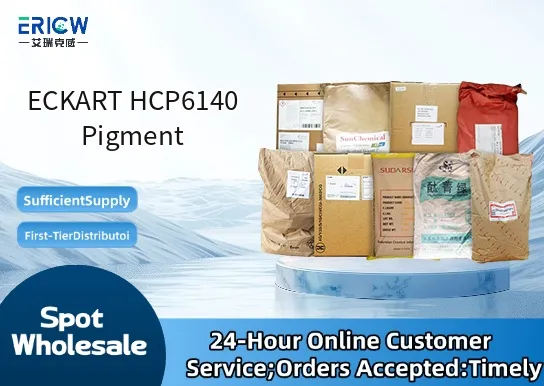
Highly dispersible aluminum pigment with optimized particle size distribution for consistent metallic effect.
Excellent lightfastness and weather resistance, suitable for demanding outdoor applications.
Low oil absorption enabling efficient formulation in solvent-based and high-solids coating systems.
Controlled leafing behavior ensures uniform orientation and superior brightness in film formation.
Free of heavy metals and compliant with major global regulatory frameworks including REACH and RoHS.
Automotive OEM and refinish coatings requiring high-gloss metallic appearance.
Industrial maintenance paints for machinery, infrastructure, and metal furniture.
Plastic color concentrates for injection-molded and extruded components.
Architectural coatings including facade paints and decorative metal-effect finishes.
Printing inks for premium packaging and security applications.
| Chemical Type | Flake-shaped aluminum pigment |
| Product Form | Wet paste (in mineral spirits) |
| Appearance | Silvery-white paste with metallic luster |
| Primary Applications | Automotive, industrial, and architectural coatings; plastics; printing inks |
| Key Features | High brightness, controlled leafing, excellent dispersion stability |
| Benefits | Enhanced color consistency, reduced formulation viscosity, improved film integrity |
| Storage Stability | 12 months unopened at 15–25°C |
| Handling Recommendation | Use non-sparking tools; avoid prolonged skin contact |
Q1: What is the primary function of ECKART HCP6140 Pigment in coating and ink systems?
A: ECKART HCP6140 is a high-performance pearlescent pigment based on mica coated with titanium dioxide. It delivers strong chromatic shift, excellent brightness, and pronounced metallic or interference effects—commonly used to enhance visual impact in decorative and functional coatings, automotive refinishes, and specialty printing inks.
Q2: Is ECKART HCP6140 suitable for water-based formulations?
A: Yes, HCP6140 is surface-treated to provide good compatibility and dispersion stability in both solvent-based and water-based systems. However, optimal performance requires appropriate wetting agents and controlled dispersion processes—especially in low-VOC or high-solids aqueous coatings.
Q3: How does ECKART HCP6140 compare to conventional aluminum pigments in terms of weather resistance?
A: Unlike metallic aluminum pigments, HCP6140 is chemically inert and non-oxidizing due to its ceramic oxide structure. It offers significantly superior UV stability, acid/alkali resistance, and long-term color retention—making it preferred for exterior applications where durability under environmental stress is critical.
Q4: What are key handling considerations during incorporation into a formulation?
A: To preserve flake integrity and optical performance, avoid high-shear mixing methods such as bead milling or aggressive rotor-stator dispersion. Recommended techniques include gentle stirring, dissolver-type mixing, or low-energy pearl milling—always followed by careful stabilization and viscosity adjustment.
Contact With Us:
E-mail: wangxingqiang@ericwchem.com
Have a Questions? Call Us:
Add:
Building A1, Jiete Industrial Park, Huangpu District, Guangzhou City, Guangdong Province, China