English
 Español
 tiếng việt
 русский
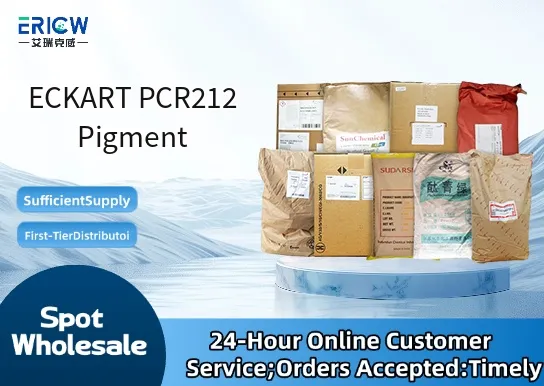
Highly reflective aluminum flake pigment with controlled particle size distribution for consistent optical performance.
Optimized surface treatment for excellent dispersion stability in solvent-based and high-solids coating systems.
Superior weather resistance and UV stability, maintaining metallic brilliance under prolonged outdoor exposure.
Low oil absorption enabling high loading levels without compromising viscosity or application properties.
ECO-friendly formulation compliant with REACH and RoHS directives; free of heavy metals and halogenated compounds.
Automotive OEM and refinish coatings requiring durable, high-gloss metallic effects.
Industrial maintenance coatings for bridges, storage tanks, and structural steel.
Plastic color concentrates for automotive interior trim and consumer electronics housings.
Architectural metal-effect paints for façades, roofing, and cladding systems.
Specialty printing inks for security labels and premium packaging applications.
| Chemical Type | Aluminum pigment (leafing type) |
| Product Form | Wet paste in aromatic-free mineral solvent |
| Appearance | Silvery-gray viscous paste with metallic sheen |
| Primary Applications | High-performance metallic coatings and plastic coloration |
| Key Features | Leafing behavior, high reflectivity, low turbidity |
| Benefits | Enhanced hiding power, uniform orientation, reduced mottling |
| Storage Stability | 12 months at 5–30 °C in unopened original container |
| VOC Content | <10 g/L (as supplied) |
Q1: What is the primary application of ECKART PCR212 Pigment?
A: ECKART PCR212 is a high-performance pearlescent pigment designed for use in demanding plastic applications, particularly polyolefins (e.g., PP and PE), engineering thermoplastics, and masterbatches where excellent heat stability, dispersion behavior, and optical clarity are required.
Q2: Is ECKART PCR212 suitable for food-contact plastics?
A: Yes — PCR212 is formulated to comply with global food-contact regulations for plastics, including FDA 21 CFR and EU Framework Regulation (EC) No 1935/2004. Its inert, non-leaching composition ensures suitability for indirect food-contact applications when used within recommended processing conditions and dosage ranges.
Q3: How should PCR212 be dispersed in polymer systems?
A: Optimal dispersion is achieved via high-shear compounding (e.g., twin-screw extrusion) at temperatures appropriate for the base polymer. Pre-mixing with carrier resin or using liquid carriers (e.g., mineral oil or polymer melts) prior to extrusion enhances uniformity. Avoid prolonged residence time at peak temperature to preserve luster and particle integrity.
Q4: What is the typical dosage range for PCR212 in plastic formulations?
A: Dosage depends on the desired visual effect and polymer matrix, but it is generally used at low concentrations — typically ranging from 0.1% to 2% by weight — with most applications achieving optimal pearlescence between 0.3% and 1.2%.
Contact With Us:
E-mail: wangxingqiang@ericwchem.com
Have a Questions? Call Us:
Add:
Building A1, Jiete Industrial Park, Huangpu District, Guangzhou City, Guangdong Province, China