English
 Español
 tiếng việt
 русский
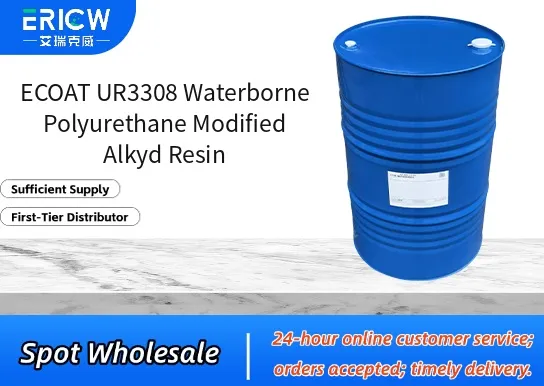
Waterborne formulation delivering low VOC content (< 50 g/L), compliant with stringent global environmental regulations.
Enhanced film toughness and abrasion resistance due to polyurethane modification, outperforming conventional alkyds.
Excellent hydrolytic stability and storage shelf life (>12 months at 5–30°C) without coalescent solvents or added biocides.
Good recoatability and intercoat adhesion on both porous and non-porous substrates, including wood, metal, and primed plastics.
Fast ambient drying (tack-free in ≤45 min at 25°C/60% RH) with full hardness development within 7 days.
Interior architectural coatings for high-traffic commercial spaces such as offices, schools, and healthcare facilities.
Wood finishing systems for furniture, cabinetry, and millwork requiring durable, low-odor topcoats.
Protective coatings for light-duty industrial metal components, including HVAC enclosures and retail fixtures.
Base resin for premium waterborne varnishes and clear maintenance coatings used in heritage restoration projects.
Formulation backbone for eco-label-compliant decorative paints targeting Green Building Standards (e.g., LEED, BREEAM).
| Chemical Type | Waterborne polyurethane-modified alkyd resin |
| Product Form | Liquid dispersion in water |
| Appearance | Opaque off-white to pale yellow liquid, homogeneous |
| pH (10% aqueous solution) | 8.0 – 8.8 |
| Solids Content (wt%) | 42.0 ± 1.5 |
| Viscosity (Brookfield RVT, #3 spindle, 20 rpm, 25°C) | 2,500 – 4,500 cP |
| Minimum Film Formation Temperature (MFFT) | ≤ 15°C |
| Primary Applications | Waterborne architectural and industrial topcoats; clear and pigmented finishes |
Q1: What are the key advantages of ECOAT UR3308 compared to conventional solvent-based alkyds?
A: ECOAT UR3308 offers significantly reduced VOC content while retaining the excellent film formation, flexibility, and substrate adhesion typical of alkyd resins. Its polyurethane modification enhances mechanical durability, chemical resistance, and gloss retention—without requiring high-temperature curing or strong organic solvents.
Q2: Is ECOAT UR3308 compatible with common waterborne acrylic or epoxy dispersions?
A: Yes—ECOAT UR3308 is formulated for broad compatibility with many waterborne polymer systems, including acrylic emulsions and epoxy dispersions. Compatibility should be verified in the final formulation, as performance may vary depending on pH, ionic strength, and surfactant balance.
Q3: How does ECOAT UR3308 contribute to improved corrosion protection in waterborne industrial coatings?
A: The resin’s hydrophobic polyurethane domains and robust crosslinking potential help reduce water permeability in cured films. When combined with appropriate anti-corrosive pigments and inhibitors, it supports enhanced barrier properties and long-term substrate protection in mild to moderate exposure environments.
Q4: Can ECOAT UR3308 be used in ambient-cure applications without added catalysts?
A: Yes—it is designed for ambient air-drying formulations and achieves practical handling strength within hours. For accelerated through-cure or enhanced hardness development, optional low-temperature coalescing aids or mild crosslinkers may be incorporated based on application requirements.
Contact With Us:
E-mail: wangxingqiang@ericwchem.com
Have a Questions? Call Us:
Add:
Building A1, Jiete Industrial Park, Huangpu District, Guangzhou City, Guangdong Province, China