English
 Español
 tiếng việt
 русский
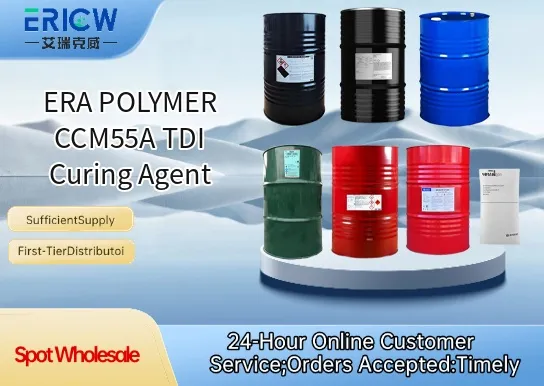
High reactivity with hydroxyl-terminated polyether and polyester polyols for rapid gelation and short demold times.
Excellent compatibility with aromatic and aliphatic polyol systems, ensuring homogeneous dispersion and stable formulations.
Consistent batch-to-batch performance due to strict raw material control and proprietary purification of TDI-based prepolymer.
Low volatility and reduced free TDI monomer content (<0.1 wt%), enhancing workplace safety and regulatory compliance.
Optimized functionality (average NCO content ~12.8–13.2%) for balanced cure speed, mechanical strength, and processing flexibility.
Flexible slabstock polyurethane foam for bedding and upholstered furniture.
Integral skin foams used in automotive interior components (e.g., armrests, headrests, steering wheels).
Reaction injection molding (RIM) systems for durable elastomeric parts.
Coated fabrics and synthetic leather substrates requiring high tensile strength and abrasion resistance.
Sealants and adhesives where fast green strength development is critical.
| Chemical Type | TDI-based aromatic polyisocyanate prepolymer |
| Product Form | Liquid |
| Appearance | Clear to pale yellow transparent liquid |
| NCO Content (wt%) | 12.8–13.2 |
| Viscosity at 25°C (mPa·s) | 150–250 |
| Free TDI (wt%) | ≤0.1 |
| Density at 25°C (g/cm³) | 1.18–1.22 |
| Storage Stability | ≥6 months at 15–25°C in sealed containers under dry nitrogen |
Q1: What is the primary function of ERA POLYMER CCM55A in polyurethane systems?
A: CCM55A is a TDI-based aromatic curing agent designed to react with hydroxyl-terminated prepolymers or resins, enabling rapid crosslinking and development of high mechanical strength, abrasion resistance, and thermal stability in final polyurethane elastomers and coatings.
Q2: Is CCM55A suitable for moisture-sensitive applications?
A: Due to its aromatic TDI backbone, CCM55A exhibits relatively low reactivity with ambient moisture compared to aliphatic isocyanates — making it more manageable in standard industrial processing environments, though handling under dry conditions is still recommended to avoid premature gelation or viscosity increase.
Q3: How does CCM55A compare to MDI-based curing agents in terms of processing and performance?
A: CCM55A typically offers faster cure kinetics and higher crosslink density than many MDI derivatives, resulting in improved hardness and solvent resistance. However, it may require more precise stoichiometric control and generally delivers a darker-colored final product due to aromatic structure.
Q4: What are key storage and handling recommendations for CCM55A?
A: Store in tightly sealed containers under dry, cool conditions (below 30°C) and protect from humidity, direct sunlight, and contact with water or alcohols. Use appropriate PPE — including nitrile gloves and chemical-resistant goggles — as with all aromatic isocyanate derivatives.
Contact With Us:
E-mail: wangxingqiang@ericwchem.com
Have a Questions? Call Us:
Add:
Building A1, Jiete Industrial Park, Huangpu District, Guangzhou City, Guangdong Province, China