English
 Español
 tiếng việt
 русский
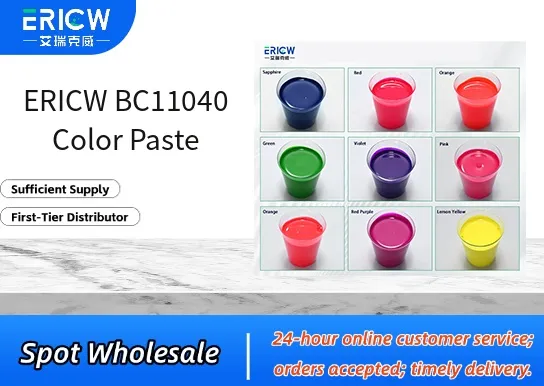
High chroma and excellent color consistency across batches.
Optimized for compatibility with water-based acrylic, polyurethane, and alkyd resin systems.
Low volatile organic compound (VOC) content, supporting sustainable formulation goals.
Excellent dispersion stability—resists sedimentation during storage up to 12 months at ambient conditions.
Non-bleeding performance in multi-layer coatings and overprinted films.
Architectural waterborne interior and exterior wall paints.
Industrial maintenance coatings for metal and concrete substrates.
Wood finishes including stains, lacquers, and clear topcoats.
Plastic coloration for rigid PVC, ABS, and polycarbonate applications.
Printing inks for packaging and decorative laminates.
| Chemical Type | Organic pigment dispersion in aqueous medium |
| Product Form | Viscous liquid paste |
| Appearance | Homogeneous, non-settling paste with uniform color tone |
| pH Value (25°C) | 7.8–8.5 |
| Brookfield Viscosity (25°C, spindle #3, 6 rpm) | 8,000–12,000 cP |
| Solids Content (wt%) | 38–42% |
| Density (25°C) | 1.12–1.16 g/cm³ |
| Storage Stability | 12 months unopened at 5–30°C; stir before use |
Q1: What types of polymer systems is ERICW BC11040 Color Paste compatible with?
A: ERICW BC11040 is formulated for compatibility with a broad range of thermoplastics, including polyolefins (PP, PE), ABS, PS, and certain engineering resins. Compatibility should be verified through preliminary dispersion and thermal stability testing under actual processing conditions.
Q2: How should ERICW BC11040 be incorporated into the base resin?
A: It is typically introduced via masterbatch dilution or direct high-shear mixing during compounding. Pre-drying is not required, but uniform dispersion is critical—optimal results are achieved using twin-screw extruders with adequate residence time and temperature control.
Q3: Does ERICW BC11040 contain heavy metals or restricted substances?
A: ERICW BC11040 is manufactured without intentionally added lead, cadmium, mercury, or hexavalent chromium, and complies with widely recognized industry expectations for general-purpose colorants. Specific regulatory compliance depends on final application and regional requirements, and full declaration of components is available upon request.
Q4: What is the recommended dosage range for achieving target color strength?
A: Dosage depends on the base polymer, desired chroma, and processing method, but it is typically used at low concentrations—generally ranging from 0.1% to 2% by weight. Optimal loading should be determined experimentally to balance color development, dispersion quality, and mechanical performance.
Q5: How stable is the colorant under standard injection molding or extrusion conditions?
A: ERICW BC11040 demonstrates good thermal stability up to typical processing temperatures for common thermoplastics. However, prolonged exposure above 260 °C or extended residence time may affect hue consistency—validation under end-use processing parameters is strongly advised.
Contact With Us:
E-mail: wangxingqiang@ericwchem.com
Have a Questions? Call Us:
Add:
Building A1, Jiete Industrial Park, Huangpu District, Guangzhou City, Guangdong Province, China