English
 Español
 tiếng việt
 русский
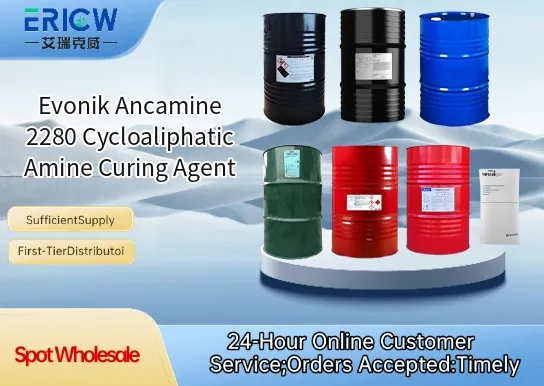
Low viscosity for excellent processability and easy handling in resin systems.
Fast ambient-cure kinetics with good pot life balance for efficient manufacturing.
Superior UV and weather resistance due to fully saturated cycloaliphatic structure.
Low volatility and low odor, supporting safer workplace environments and compliance with VOC regulations.
Excellent chemical resistance and mechanical performance in cured epoxy networks.
High-performance coatings for industrial maintenance and infrastructure protection.
Electrical insulation systems including castings, potting compounds, and busbar coatings.
Composite matrix resins for aerospace and wind energy applications requiring durability and thermal stability.
Adhesives and structural bonding formulations demanding rapid build-up of strength at room temperature.
Marine and offshore protective coatings requiring long-term corrosion resistance and hydrolytic stability.
| Chemical Type | Cycloaliphatic amine |
| Product Form | Liquid |
| Appearance | Clear, pale yellow liquid |
| Primary Applications | Epoxy resin curing agent for coatings, composites, adhesives and electrical encapsulation |
| Key Features | Ambient-curing, low viscosity, UV-stable, low volatility |
| Benefits | Improved productivity, enhanced durability, reduced emissions, superior adhesion |
| Density (20 °C) | ~0.94 g/cm³ |
| Reactive Amine Hydrogen Equivalent Weight (AHEW) | ~105 g/eq |
Q1: What are the key performance advantages of Ancamine 2280 compared to conventional aliphatic amines?
A: Ancamine 2280 offers improved yellowing resistance, enhanced thermal stability, and lower volatility than many standard aliphatic amine curing agents—making it well-suited for high-clarity coatings and applications requiring long-term UV and heat exposure resistance.
Q2: Is Ancamine 2280 compatible with standard epoxy resins used in industrial coatings and composites?
A: Yes, Ancamine 2280 is broadly compatible with common liquid and solid bisphenol-A and bisphenol-F epoxy resins, as well as novolac epoxies. Its reactivity profile supports both ambient-cure and elevated-temperature cure formulations.
Q3: How does the cycloaliphatic structure influence handling and safety considerations?
A: The saturated cycloaliphatic backbone reduces skin sensitization potential relative to aromatic amines and lowers vapor pressure versus linear aliphatic amines—contributing to improved workplace handling characteristics and reduced odor impact.
Q4: Can Ancamine 2280 be used in low-VOC or high-solids coating systems?
A: Yes—its low volatility and high active hydrogen content enable formulation flexibility in low-VOC, high-solids, and solvent-free epoxy systems without compromising pot life or final film properties.
Contact With Us:
E-mail: wangxingqiang@ericwchem.com
Have a Questions? Call Us:
Add:
Building A1, Jiete Industrial Park, Huangpu District, Guangzhou City, Guangdong Province, China