English
 Español
 tiếng việt
 русский
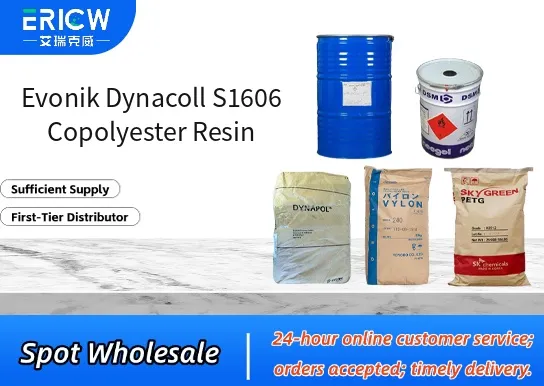
High thermal stability with excellent melt processability for extrusion and injection molding.
Outstanding adhesion to polar substrates including PET, PA, and aluminum foil.
Low-temperature sealing performance down to ~85 °C with strong hot-tack strength.
Good chemical resistance against oils, greases, and common food simulants.
Compliant with EU Regulation (EC) No. 10/2011 and FDA 21 CFR §177.1390 for food-contact applications.
Heat-seal layers in flexible packaging laminates for snacks and dried foods.
Sealing layer in retortable pouches requiring steam-sterilization stability.
Adhesive tie-layer in multilayer coextruded films for barrier packaging.
Sealant resin for pharmaceutical blister lidding foils.
Component in sustainable mono-material PE-based laminates for recyclability.
| Chemical Type | Aliphatic-aromatic copolyester |
| Product Form | Pellets |
| Appearance | Off-white to pale yellow granules |
| Melt Flow Rate (MFR, 230 °C / 2.16 kg) | 12–16 g/10 min |
| Softening Point (Vicat, 50 N) | 92–98 °C |
| Density (23 °C) | 1.18–1.20 g/cm³ |
| Primary Applications | Flexible packaging sealants and tie-layers |
| Key Features | Low-seal initiation, high hot-tack, food-contact compliant |
Q1: What is the primary function of Dynacoll S1606 in hot melt adhesive formulations?
A: Dynacoll S1606 functions as a reactive copolyester resin that enhances cohesive strength, heat resistance, and substrate adhesion—particularly on polar and difficult-to-bond surfaces—while maintaining good melt processability and open time.
Q2: Is Dynacoll S1606 compatible with common hot melt base polymers such as EVA, PO, and APAO?
A: Yes, Dynacoll S1606 demonstrates broad compatibility with ethylene-vinyl acetate (EVA), polyolefin (PO), and amorphous polyalphaolefin (APAO) systems, enabling formulation flexibility for tailored performance profiles without phase separation under standard processing conditions.
Q3: How does Dynacoll S1606 contribute to thermal stability in high-performance hot melts?
A: Its copolyester architecture provides improved thermal resistance compared to conventional polyester resins, supporting stable viscosity retention and reduced degradation during extended melt processing at elevated temperatures—typically up to 180–190 °C.
Q4: Can Dynacoll S1606 be used in food-contact or medical-grade adhesive applications?
A: Dynacoll S1606 is designed for industrial adhesive applications and may be considered for certain regulated uses subject to full formulation evaluation, regulatory review, and compliance verification by the end-user—Evonik does not provide pre-approval for specific food-contact or medical applications.
Contact With Us:
E-mail: wangxingqiang@ericwchem.com
Have a Questions? Call Us:
Add:
Building A1, Jiete Industrial Park, Huangpu District, Guangzhou City, Guangdong Province, China