English
 Español
 tiếng việt
 русский
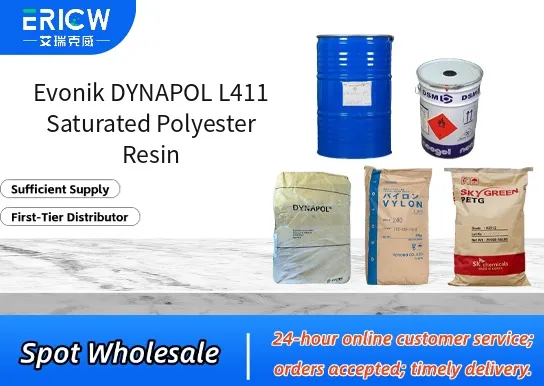
High chemical resistance to solvents, acids, and alkalis.
Excellent weathering and UV stability for long-term outdoor performance.
Low viscosity enabling easy handling, high solids formulation, and reduced VOC content.
Good compatibility with melamine-formaldehyde crosslinkers for thermoset coatings.
Consistent batch-to-batch reproducibility meeting stringent quality control standards.
Automotive OEM and refinish topcoats.
Industrial maintenance coatings for metal substrates.
Appliance coatings requiring hardness and gloss retention.
General-purpose coil coatings for pre-painted metal.
High-performance powder coating binders (when formulated with appropriate curing agents).
| Chemical Type | Saturated polyester resin |
| Product Form | Liquid, solvent-based |
| Appearance | Clear, pale yellow to colorless liquid |
| Primary Applications | Thermosetting coatings (e.g., with melamine or TGIC) |
| Key Features | High crosslink density, low volatility, excellent flow & leveling |
| Benefits | Enhanced durability, superior film formation, and improved corrosion protection |
| Recommended Cure Temperature | 140–180 °C (depending on crosslinker and formulation) |
| Storage Stability | ≥6 months at 20 °C in sealed original container |
Q1: What is the primary function of DYNAPOL L411 in powder coating formulations?
A: DYNAPOL L411 serves as a reactive binder component in thermosetting polyester-based powder coatings, providing excellent flow, leveling, and mechanical film properties upon curing with triglycidyl isocyanurate (TGIC) or hydroxyalkyl amide (HAA) crosslinkers.
Q2: Is DYNAPOL L411 suitable for outdoor applications requiring UV resistance?
A: Yes — as a saturated polyester resin, DYNAPOL L411 offers inherently good weatherability and UV stability, making it well-suited for exterior-grade powder coatings used on architectural aluminum, façade elements, and outdoor furniture.
Q3: How does DYNAPOL L411 compare to standard glycidyl-functional acrylic resins in terms of cure response?
A: DYNAPOL L411 exhibits a more balanced reactivity profile than many acrylics — offering good storage stability at ambient temperature while enabling full cure at typical powder coating bake cycles (e.g., 180–200 °C for 10–20 minutes), without excessive sensitivity to overbake conditions.
Q4: Can DYNAPOL L411 be blended with other polyester resins to modify performance?
A: Yes — DYNAPOL L411 is compatible with a broad range of saturated and unsaturated polyester resins, allowing formulators to fine-tune gloss, flexibility, chemical resistance, and impact performance through strategic blending.
Contact With Us:
E-mail: wangxingqiang@ericwchem.com
Have a Questions? Call Us:
Add:
Building A1, Jiete Industrial Park, Huangpu District, Guangzhou City, Guangdong Province, China