English
 Español
 tiếng việt
 русский
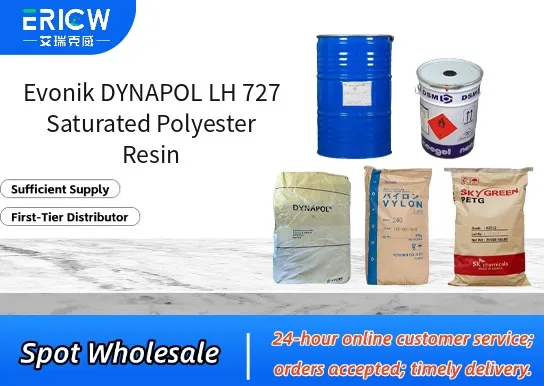
High chemical resistance to solvents, acids, and alkalis in cured coatings.
Excellent weathering and UV stability for long-term outdoor performance.
Low viscosity enabling high solids formulations with good flow and leveling.
Outstanding compatibility with melamine formaldehyde crosslinkers for thermoset systems.
Good mechanical properties including hardness, flexibility, and adhesion on metal substrates.
Automotive OEM and refinish topcoats requiring high gloss and durability.
Industrial coil coatings for pre-painted metal used in building and appliance manufacturing.
General-purpose metal packaging coatings (e.g., food and beverage cans).
Architectural aluminum extrusion coatings for façades and curtain walls.
Functional powder coating binders for indoor and outdoor architectural applications.
| Chemical Type | Saturated polyester resin |
| Product Form | Pale yellow to light amber liquid |
| Appearance | Clear, homogeneous liquid |
| Primary Applications | Thermoset coatings for metal substrates |
| Key Features | High reactivity with amino crosslinkers, low VOC potential |
| Benefits | Enables high-gloss, durable, and corrosion-resistant finishes |
| Recommended Crosslinker | Melamine-formaldehyde resins (e.g., Cymel® 303, Resimene® 747) |
| Storage Stability | Stable for ≥12 months at 20–25 °C in sealed containers |
Q1: What is the primary application of DYNAPOL LH 727 in coating systems?
A: DYNAPOL LH 727 is a low-viscosity, saturated polyester resin designed primarily as a reactive diluent and performance modifier in high-solids and solvent-free thermoset coatings—especially for coil, can, and general metal finishing applications where excellent flow, gloss, and crosslink density are required.
Q2: Is DYNAPOL LH 727 compatible with common crosslinkers used in industrial baking coatings?
A: Yes, it exhibits good compatibility and reactivity with standard amino resins (e.g., melamine-formaldehyde and benzoguanamine types), as well as with polyisocyanates in two-component systems. Its hydroxyl functionality enables efficient co-reactivity without requiring catalysts in most standard cure schedules.
Q3: How does DYNAPOL LH 727 contribute to VOC reduction in coating formulations?
A: Due to its inherently low volatility and high solids content, DYNAPOL LH 727 allows formulators to reduce or eliminate traditional volatile organic solvents while maintaining processability—supporting compliance with evolving VOC regulations without compromising film formation or final film properties.
Q4: Can DYNAPOL LH 727 be used in food-contact compliant coating systems?
A: While DYNAPOL LH 727 itself is not a finished food-contact coating, it may be incorporated into formulations intended for incidental food contact—subject to full system evaluation and compliance with applicable regional regulatory frameworks. End-use approval always depends on the complete cured coating composition and processing conditions.
Contact With Us:
E-mail: wangxingqiang@ericwchem.com
Have a Questions? Call Us:
Add:
Building A1, Jiete Industrial Park, Huangpu District, Guangzhou City, Guangdong Province, China