English
 Español
 tiếng việt
 русский
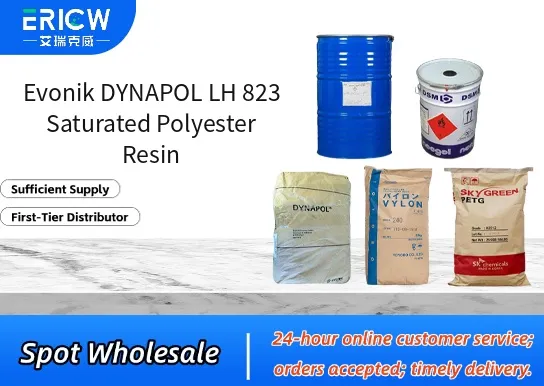
Highly weather-resistant with excellent UV stability for long-term outdoor performance.
Low viscosity enabling easy handling, good flow, and high solids content formulation.
Outstanding gloss retention and surface hardness after curing.
Compatible with standard amino crosslinkers (e.g., melamine-formaldehyde) for thermoset coatings.
Designed for low-VOC coating systems meeting stringent environmental regulations.
Automotive OEM clearcoats and topcoats.
Premium industrial maintenance coatings for architectural metal.
Coil coatings requiring high durability and color stability.
General-purpose high-performance appliance finishes.
Exterior signage and façade cladding coatings.
| Chemical Type | Saturated polyester resin |
| Product Form | Liquid, solvent-based |
| Appearance | Clear to pale yellow, homogeneous liquid |
| Primary Applications | Thermoset decorative and protective coatings |
| Key Features | Weather resistance, gloss retention, crosslinker compatibility |
| Benefits | Reduced VOC potential, excellent film formation, high mechanical strength |
| Recommended Crosslinker | Melamine-formaldehyde resins (highly methylolated) |
| Storage Stability | ≥12 months at 20–25 °C in sealed original container |
Q1: What is the primary application of DYNAPOL LH 823 in coating systems?
A: DYNAPOL LH 823 is a low-viscosity, saturated polyester resin designed primarily as a reactive diluent and film-forming binder in high-performance powder coatings—especially for architectural and industrial metal substrates requiring excellent gloss retention, weather resistance, and mechanical durability.
Q2: How does DYNAPOL LH 823 differ from conventional unsaturated polyester resins?
A: Unlike unsaturated polyesters, DYNAPOL LH 823 contains no carbon–carbon double bonds, eliminating reactivity toward free-radical curing mechanisms. It is engineered for use with triglycidyl isocyanurate (TGIC) or hydroxyalkyl amide (HAA) crosslinkers in thermosetting powder coatings, offering improved UV stability and reduced yellowing under outdoor exposure.
Q3: Is DYNAPOL LH 823 suitable for food-contact compliant coating formulations?
A: DYNAPOL LH 823 is not inherently certified for food contact; its suitability depends on the full formulation—including crosslinker, additives, and curing conditions—as well as compliance verification against applicable regional regulatory frameworks. Formulators should conduct full migration testing and consult Evonik’s regulatory documentation for support.
Q4: What are typical handling and storage recommendations for this resin?
A: Store in original sealed containers at temperatures between 15 °C and 30 °C, protected from moisture and direct sunlight. Avoid prolonged exposure to elevated temperatures prior to processing, as extended heat may affect viscosity and reactivity profile. Always follow standard industrial hygiene practices when handling powdered or molten resin.
Contact With Us:
E-mail: wangxingqiang@ericwchem.com
Have a Questions? Call Us:
Add:
Building A1, Jiete Industrial Park, Huangpu District, Guangzhou City, Guangdong Province, China