English
 Español
 tiếng việt
 русский
High chemical resistance to solvents, acids, and alkalis in cured coatings.
Excellent weathering stability and UV resistance for long-term outdoor performance.
Low viscosity enabling high-solids formulations and improved application efficiency.
Outstanding compatibility with melamine formaldehyde crosslinkers for thermoset systems.
Good mechanical properties including hardness, flexibility, and impact resistance.
Automotive OEM and refinish topcoats requiring high gloss and durability.
Industrial maintenance coatings for metal structures and equipment.
Powder coating binders for architectural aluminum extrusions.
Coil coating systems for pre-painted steel and aluminum substrates.
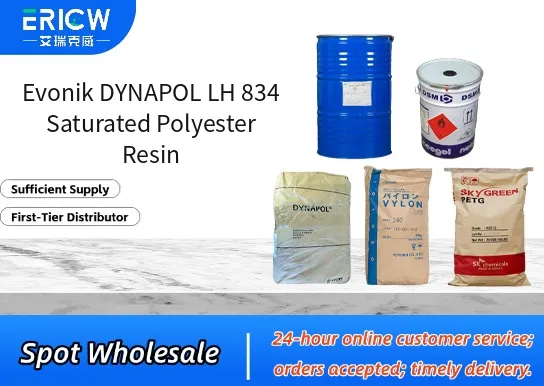
| Chemical Type | Saturated polyester resin |
| Product Form | Liquid, solvent-based |
| Appearance | Clear to pale yellow transparent liquid |
| Primary Applications | Thermoset coatings (e.g., coil, automotive, industrial) |
| Key Features | High crosslink density, low VOC potential, excellent flow and leveling |
| Benefits | Enhanced corrosion protection, superior gloss retention, broad formulation latitude |
| Recommended Crosslinker | Melamine-formaldehyde resins (high- or medium-amino) |
Q1: What is the primary application area for DYNAPOL LH 834?
A: DYNAPOL LH 834 is specifically designed as a low-viscosity, high-reactivity saturated polyester resin for use in thermosetting powder coatings—particularly in decorative and functional coatings for metal substrates such as appliances, furniture, and architectural components.
Q2: How does DYNAPOL LH 834 differ from standard saturated polyesters used in powder coatings?
A: Unlike conventional saturated polyesters, LH 834 features an optimized molecular architecture that delivers enhanced flow and leveling behavior, improved gloss retention after curing, and superior resistance to yellowing under UV exposure—making it especially suitable for high-end decorative finishes.
Q3: Which curing agents is DYNAPOL LH 834 typically formulated with?
A: This resin is compatible with standard triglycidyl isocyanurate (TGIC) and hydroxyalkyl amide (HAA) crosslinkers. Formulation selection depends on end-use requirements—including regulatory considerations, cure schedule, and performance targets—so compatibility testing under actual processing conditions is recommended.
Q4: What are the key handling and storage recommendations?
A: Store in original sealed containers in a cool, dry place away from direct sunlight and moisture. Prolonged exposure to elevated temperatures or humidity may affect reactivity and storage stability. Always follow Evonik’s Safety Data Sheet (SDS) for safe handling, personal protection, and disposal guidelines.
Contact With Us:
E-mail: wangxingqiang@ericwchem.com
Have a Questions? Call Us:
Add:
Building A1, Jiete Industrial Park, Huangpu District, Guangzhou City, Guangdong Province, China