English
 Español
 tiếng việt
 русский
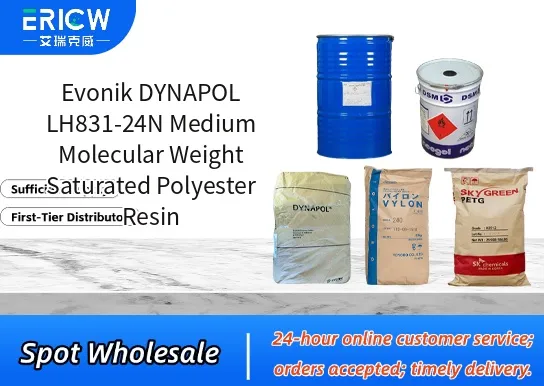
Medium molecular weight design enables balanced melt viscosity and excellent film-forming capability.
Highly saturated backbone ensures outstanding UV stability and long-term color retention.
Low acid value (< 5 mg KOH/g) minimizes reactivity with sensitive crosslinkers and improves storage stability.
Excellent compatibility with melamine formaldehyde and urea-formaldehyde resins for thermoset coatings.
Consistent batch-to-batch reproducibility meeting Evonik’s stringent quality control standards.
Powder coating binders for architectural aluminum profiles and façade components.
High-performance coil coatings requiring weather resistance and gloss retention.
Interior and exterior appliance finishes demanding smooth appearance and mechanical durability.
General-purpose industrial maintenance coatings for metal substrates.
| Chemical Type | Saturated polyester resin |
| Product Form | Free-flowing granules |
| Appearance | White to off-white, homogeneous granules |
| Acid Value | 2–4 mg KOH/g |
| Hydroxyl Value | 28–32 mg KOH/g |
| Gardner Color (10% in MEK) | ≤ 3 |
| Moisture Content | ≤ 0.2 wt% |
| Primary Applications | Powder coatings, coil coatings, industrial metal finishes |
Q1: What is the primary application of DYNAPOL LH831-24N in powder coatings?
A: DYNAPOL LH831-24N is specifically designed as a medium molecular weight saturated polyester resin for use in TGIC-free and HAA-cured thermosetting powder coatings, where it contributes to balanced flow, mechanical robustness, and excellent weather resistance.
Q2: How does LH831-24N differ from low- or high-MW variants in the DYNAPOL LH series?
A: As a medium molecular weight grade, LH831-24N offers a compromise between melt viscosity and crosslink density—providing easier extrusion and improved film formation compared to higher-MW resins, while delivering better hardness and chemical resistance than lower-MW alternatives.
Q3: Is DYNAPOL LH831-24N compatible with common curing agents used in architectural and industrial powder coatings?
A: Yes—it is formulated for compatibility with hydroxyalkyl amide (HAA) curing agents such as Primid XL-552 and other standard HAA types, and can also be adapted for use with alternative co-reactants like β-hydroxy ester systems, subject to formulation optimization.
Q4: What are the recommended storage conditions to maintain resin stability?
A: Store in original sealed packaging in a cool, dry place away from direct sunlight and sources of heat or moisture. Prolonged exposure to high humidity or elevated temperatures may affect handling properties and shelf life.
Contact With Us:
E-mail: wangxingqiang@ericwchem.com
Have a Questions? Call Us:
Add:
Building A1, Jiete Industrial Park, Huangpu District, Guangzhou City, Guangdong Province, China