English
 Español
 tiếng việt
 русский
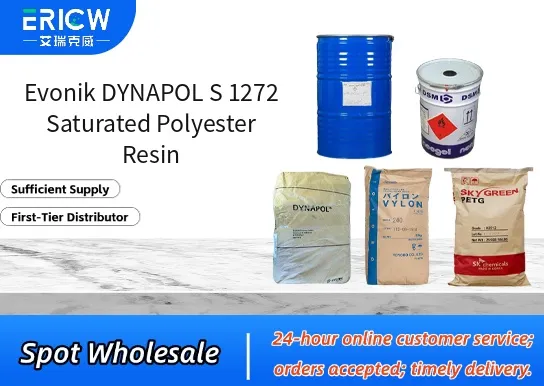
High chemical resistance to solvents, acids, and alkalis in cured coatings.
Excellent weatherability and UV stability for long-term outdoor performance.
Low viscosity enabling high solids formulation with good flow and leveling.
Outstanding hardness and scratch resistance after crosslinking with melamine or isocyanate curing agents.
Good compatibility with acrylics, epoxies, and common pigments and additives.
Automotive OEM clearcoats and topcoats.
Industrial coil coatings for pre-painted metal substrates.
Appliance finishes requiring durability and gloss retention.
General-purpose high-performance protective coatings for metal substrates.
Two-component (2K) polyurethane topcoats for demanding industrial applications.
| Chemical Type | Saturated polyester resin |
| Product Form | Liquid, solvent-based |
| Appearance | Clear, pale yellow liquid |
| Primary Applications | High-performance thermoset coatings |
| Key Features | High crosslink density, low VOC potential, excellent film formation |
| Recommended Curing Agents | Melamine-formaldehyde resins, aliphatic isocyanates |
| Storage Stability | ≥12 months at 20–25 °C in sealed container |
| Typical Solvent System | Xylene / butyl acetate / PGMEA blend |
Q1: What is the primary application of DYNAPOL S 1272 in coating systems?
A: DYNAPOL S 1272 is primarily used as a reactive diluent and viscosity modifier in high-solids and low-VOC thermosetting polyester-based coil coatings, can coatings, and industrial finishes—enhancing flow, leveling, and crosslink density without compromising film hardness or chemical resistance.
Q2: How does DYNAPOL S 1272 differ from unsaturated polyester resins?
A: Unlike unsaturated polyesters, DYNAPOL S 1272 contains no carbon–carbon double bonds in its backbone, making it inherently more stable toward UV exposure and oxidation—ideal for applications requiring long-term color retention and minimal yellowing under ambient or baked conditions.
Q3: Is DYNAPOL S 1272 compatible with common crosslinkers used in industrial baking systems?
A: Yes—it exhibits excellent compatibility with melamine-formaldehyde resins, urea-formaldehyde derivatives, and blocked isocyanates, enabling robust cure profiles across standard industrial baking schedules (e.g., 15–30 min at 140–200 °C).
Q4: What are the key handling and storage recommendations?
A: Store in tightly sealed containers at temperatures between 10 °C and 30 °C, away from direct sunlight and moisture. Prolonged exposure to elevated temperatures or humidity may affect viscosity stability and shelf life. Always follow Evonik’s Safety Data Sheet for safe handling procedures.
Contact With Us:
E-mail: wangxingqiang@ericwchem.com
Have a Questions? Call Us:
Add:
Building A1, Jiete Industrial Park, Huangpu District, Guangzhou City, Guangdong Province, China