English
 Español
 tiếng việt
 русский
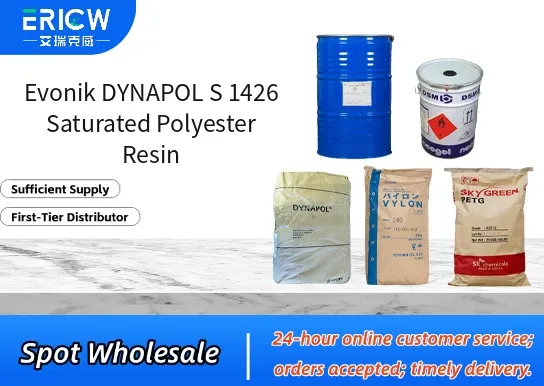
High chemical resistance to solvents, acids, and alkalis in cured coatings.
Excellent weathering stability and UV resistance for long-term outdoor performance.
Low viscosity enables high solids formulation with good flow and leveling.
Compatible with common crosslinkers including TGIC and β-hydroxyalkyl amides (HAA).
Designed for outstanding mechanical properties—high hardness, flexibility, and impact resistance.
Exterior architectural powder coatings for aluminum extrusions and façades.
Automotive non-structural components such as trim, grilles, and under-hood parts.
Appliance coatings for refrigerators, washing machines, and ovens.
General industrial metal finishing requiring durability and aesthetic consistency.
| Chemical Type | Saturated polyester resin (carboxyl-functional) |
| Product Form | Pale yellow to light amber free-flowing solid flakes |
| Appearance | Homogeneous granular solid at room temperature |
| Acid Value (mg KOH/g) | 28–32 |
| Molecular Weight (Mn, GPC) | ~2,500–3,200 g/mol |
| Tg (DSC, °C) | 68–72 |
| Primary Applications | Thermosetting powder coatings (exterior grade) |
| Key Features | High reactivity, low melt viscosity, excellent storage stability |
Q1: What is the primary application of DYNAPOL S 1426 in coating systems?
A: DYNAPOL S 1426 is primarily used as a reactive diluent and viscosity modifier in high-solids and low-VOC thermosetting polyester coatings, especially in coil and can coatings where excellent flow, leveling, and crosslink density are required.
Q2: Is DYNAPOL S 1426 compatible with common crosslinkers used in industrial baking finishes?
A: Yes, it exhibits good compatibility and reactivity with standard amino resins such as melamine-formaldehyde and benzoguanamine derivatives, enabling robust cure profiles under typical industrial baking conditions.
Q3: How does DYNAPOL S 1426 contribute to film performance in cured coatings?
A: It enhances hardness, chemical resistance, and gloss retention in the final film due to its saturated backbone and controlled molecular weight distribution, while supporting flexibility through tailored ester composition.
Q4: What handling and storage recommendations apply to this resin?
A: Store in tightly sealed containers in a cool, dry place away from direct sunlight and strong oxidizing agents. Avoid prolonged exposure to elevated temperatures or moisture to maintain stability and reactivity.
Contact With Us:
E-mail: wangxingqiang@ericwchem.com
Have a Questions? Call Us:
Add:
Building A1, Jiete Industrial Park, Huangpu District, Guangzhou City, Guangdong Province, China