English
 Español
 tiếng việt
 русский
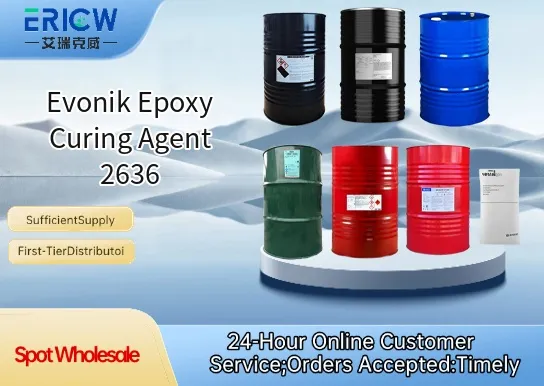
Fast-reacting aliphatic amine-based curing agent for ambient and elevated temperature cures.
Excellent chemical resistance—particularly to solvents, acids, and alkalis—after full cure.
Low viscosity enables easy handling, precise metering, and superior wetting of fillers and reinforcements.
Low volatility and reduced skin sensitization potential compared to conventional aliphatic amines.
Enables high glass transition temperature (Tg) and mechanical strength in cured epoxy systems.
High-performance industrial flooring and concrete repair mortars.
Structural adhesives for automotive and aerospace assembly.
Electrical encapsulation and potting compounds requiring thermal stability and dielectric integrity.
Composite matrix resins for wind turbine blades and pultruded profiles.
Coating systems for chemical containment tanks and marine infrastructure.
| Chemical Type | Aliphatic polyamine adduct |
| Product Form | Liquid |
| Appearance | Pale yellow to amber clear liquid |
| Viscosity (25 °C) | 200–400 mPa·s |
| Density (20 °C) | 0.92–0.95 g/cm³ |
| Amine Value | 380–420 mg KOH/g |
| Primary Applications | Epoxy resin curing for coatings, adhesives, composites, and construction materials |
| Key Features | Fast cure, low odor, low skin irritation risk, high Tg capability |
Q1: What is the primary function of Epoxy Curing Agent 2636 in epoxy formulations?
A: Evonik Epoxy Curing Agent 2636 is a specialty amine-based accelerator designed to enhance the reactivity and cure profile of conventional epoxy resins—particularly in ambient- or low-temperature curing systems—without acting as a primary hardener itself.
Q2: Is Epoxy Curing Agent 2636 compatible with standard bisphenol-A and bisphenol-F epoxy resins?
A: Yes, it demonstrates broad compatibility with common liquid and solid bisphenol-based epoxy resins, as well as novolac epoxies, and is frequently used to improve pot life control and final crosslink density in structural adhesives and coating systems.
Q3: How does this curing agent affect the mechanical properties of cured epoxy systems?
A: When properly formulated, it contributes to improved tensile strength, glass transition temperature (Tg), and chemical resistance—especially in systems where rapid development of early mechanical integrity is required.
Q4: What are typical handling and storage recommendations for this product?
A: Store in original sealed containers under dry, cool conditions (below 30 °C) and protect from moisture and prolonged exposure to air, as it is hygroscopic and may undergo surface oxidation over time.
Contact With Us:
E-mail: wangxingqiang@ericwchem.com
Have a Questions? Call Us:
Add:
Building A1, Jiete Industrial Park, Huangpu District, Guangzhou City, Guangdong Province, China