English
 Español
 tiếng việt
 русский
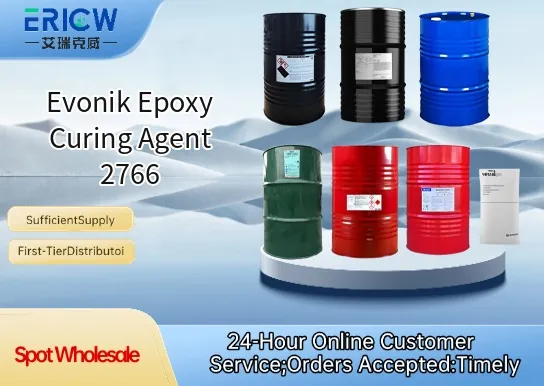
High reactivity with standard epoxy resins, enabling reduced cure times at ambient or moderate elevated temperatures.
Excellent chemical resistance post-cure, particularly against solvents, alkalis, and weak acids.
Low viscosity and good compatibility, facilitating easy handling and homogeneous mixing without solvent addition.
Low volatility and low skin sensitization potential, supporting safer industrial handling per current REACH guidelines.
Enables high glass transition temperature (Tg) and superior mechanical strength in cured networks.
High-performance industrial coatings for metal substrates, including coil and can coatings.
Electrical encapsulation and potting compounds requiring thermal stability and dielectric integrity.
Structural adhesives in automotive and rail manufacturing where fast fixture and durability are critical.
Composite matrix resins for wind turbine blade bonding and aerospace secondary structures.
Repair mortars and high-strength grouts for civil engineering infrastructure.
| Chemical Type | Aromatic amine adduct |
| Product Form | Liquid |
| Appearance | Pale yellow to amber clear liquid |
| Viscosity (25 °C) | 300–600 mPa·s |
| Density (20 °C) | 1.08–1.12 g/cm³ |
| Amine Value | 220–250 mg KOH/g |
| Reactivity Profile | Medium–high (faster than DETA, slower than m-PDA) |
| Primary Applications | Coatings, adhesives, composites, electrical encapsulation |
Q1: What is the primary chemical class of Evonik Epoxy Curing Agent 2766?
A: Evonik Epoxy Curing Agent 2766 is a modified aliphatic amine-based curing agent, engineered to provide balanced reactivity, low volatility, and improved compatibility with standard epoxy resins.
Q2: Is this curing agent suitable for applications requiring low-temperature cure?
A: Yes — it is formulated to enable effective curing at ambient to moderately elevated temperatures (e.g., 15–40 °C), making it well-suited for energy-efficient or heat-sensitive substrate applications without requiring forced thermal post-cure.
Q3: How does 2766 compare to conventional DETA or DEEDA in terms of handling safety?
A: Compared to highly reactive, volatile amines like DETA, 2766 exhibits significantly reduced vapor pressure and lower skin sensitization potential, supporting safer industrial handling — though appropriate PPE and ventilation remain essential per standard occupational hygiene practice.
Q4: Can it be used in coatings systems requiring extended pot life?
A: Yes — its tailored reactivity profile delivers extended working time relative to fast-reacting amines, particularly when blended with bisphenol-A or bisphenol-F epoxy resins at ambient conditions, enabling practical application windows for brush, roller, or spray processes.
Contact With Us:
E-mail: wangxingqiang@ericwchem.com
Have a Questions? Call Us:
Add:
Building A1, Jiete Industrial Park, Huangpu District, Guangzhou City, Guangdong Province, China