English
 Español
 tiếng việt
 русский
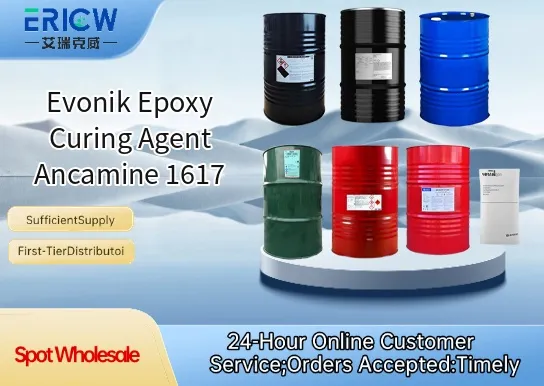
Fast-reacting aliphatic amine curing agent enabling rapid room-temperature cure of epoxy resins.
Excellent flexibility and impact resistance in cured epoxy systems without post-cure requirement.
Low viscosity and good compatibility with standard diglycidyl ether of bisphenol-A (DGEBA) epoxies.
Low volatility and reduced amine odor compared to conventional aliphatic amines, improving workplace safety.
Enables formulation of high-gloss, durable coatings with superior adhesion to metals and concrete substrates.
Industrial maintenance coatings for steel structures and offshore platforms.
High-performance floor coatings in warehouses, garages, and manufacturing facilities.
Adhesives and structural bonding systems requiring fast handling strength development.
Repair mortars and grouts for concrete infrastructure rehabilitation.
Electrical encapsulation compounds where low exotherm and dimensional stability are critical.
| Chemical Type | Aliphatic polyamine |
| Product Form | Liquid |
| Appearance | Colorless to pale yellow clear liquid |
| Primary Applications | Coatings, adhesives, mortars, and encapsulation |
| Key Features | Room-temperature cure, low viscosity, low odor |
| Benefits | Fast demolding, excellent flexibility, strong substrate adhesion |
| Reactivity Profile | Medium to fast (vs. standard DETA or TETA) |
| Storage Stability | Stable under dry, cool conditions; shelf life ≥12 months unopened |
Q1: What is the primary chemical class and functional mechanism of Ancamine 1617?
A: Ancamine 1617 is a polyetheramine-based epoxy curing agent. It functions as a reactive co-monomer that undergoes addition polymerization with epoxy resins, forming highly crosslinked thermoset networks through its primary and secondary amine groups.
Q2: Is Ancamine 1617 suitable for low-temperature or ambient-cure epoxy formulations?
A: Yes — Ancamine 1617 is specifically designed to provide efficient reactivity at ambient to moderately elevated temperatures. Its molecular structure enables good pot life and controlled cure kinetics without requiring high-temperature post-cures in many structural adhesive and coating applications.
Q3: How does Ancamine 1617 influence flexibility and toughness in cured epoxy systems?
A: Due to its flexible polyether backbone, Ancamine 1617 imparts enhanced impact resistance, reduced brittleness, and improved thermal shock performance compared to rigid aromatic amine curatives — making it well-suited for applications demanding mechanical resilience.
Q4: Can Ancamine 1617 be used in combination with other curing agents?
A: Yes — it is commonly blended with other amines (e.g., aliphatic or cycloaliphatic) or accelerators to tailor cure speed, glass transition temperature (Tg), and final mechanical properties. Compatibility should be verified experimentally for each specific formulation.
Q5: What are typical handling and storage recommendations for Ancamine 1617?
A: Store in tightly sealed containers under dry, cool conditions, protected from moisture and direct sunlight. As with all amine-based materials, avoid prolonged skin contact and ensure adequate ventilation during handling due to its alkaline nature and potential sensitization risk.
Contact With Us:
E-mail: wangxingqiang@ericwchem.com
Have a Questions? Call Us:
Add:
Building A1, Jiete Industrial Park, Huangpu District, Guangzhou City, Guangdong Province, China