English
 Español
 tiếng việt
 русский
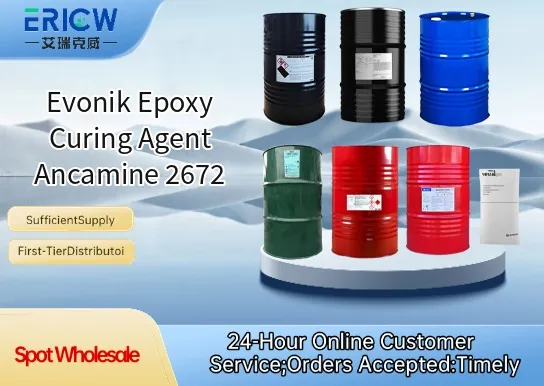
Fast-reacting aliphatic amine-based curing agent enabling rapid room-temperature cure.
Excellent chemical resistance, particularly to solvents, acids, and alkalis after full cure.
Low viscosity for easy handling, precise metering, and improved wetting of fillers and reinforcements.
Good flexibility and impact resistance in cured epoxy systems without compromising hardness.
Low volatility and low odor—supports safer processing and improved workplace air quality.
High-performance industrial flooring and concrete repair mortars.
Structural adhesives for automotive and transportation assembly.
Electrical encapsulation and potting compounds requiring fast turnaround.
Composite matrix resins for wind blade bonding and aerospace tooling.
Protective coatings for steel infrastructure and marine environments.
| Chemical Type | Aliphatic polyamine |
| Product Form | Liquid |
| Appearance | Clear, pale yellow liquid |
| Primary Applications | Epoxy resin curing for coatings, adhesives, and composites |
| Key Features | Room-temperature cure, low viscosity, low odor |
| Benefits | Shorter cycle times, improved worker safety, enhanced coating toughness |
| Compatible Resins | Bisphenol-A and bisphenol-F epoxy resins |
| Storage Conditions | Store in original sealed container at 15–25°C, protect from moisture |
Q1: What is the primary chemical class and functional mechanism of Ancamine 2672?
A: Ancamine 2672 is a low-viscosity, aliphatic polyamine-based epoxy curing agent. It functions via nucleophilic addition to epoxide groups, enabling ambient- or elevated-temperature cure of standard bisphenol-A and bisphenol-F epoxy resins, delivering good flexibility, adhesion, and chemical resistance in the final network.
Q2: Is Ancamine 2672 suitable for ambient-cure applications, and how does humidity affect its performance?
A: Yes, Ancamine 2672 is formulated for efficient ambient-cure systems, particularly where moderate pot life and rapid handling strength development are required. While it exhibits reasonable tolerance to typical ambient humidity levels, prolonged exposure to high relative humidity during cure may slightly delay surface dryness or affect gloss uniformity—controlled application conditions are recommended for optimal film appearance.
Q3: How does Ancamine 2672 compare to traditional DETA or TETA in terms of handling and safety?
A: Compared to highly volatile and skin-sensitizing amines like DETA or TETA, Ancamine 2672 offers lower vapor pressure and reduced acute dermal irritation potential, supporting improved workplace handling and lower odor impact. It still requires standard industrial hygiene practices—including gloves, eye protection, and adequate ventilation—but presents a more favorable occupational exposure profile.
Q4: Can Ancamine 2672 be used in coatings requiring FDA-compliant indirect food contact?
A: Ancamine 2672 is not pre-approved for FDA-regulated food-contact applications. Its suitability for such use depends entirely on full formulation evaluation—including cured-film extraction testing and compliance with applicable regulatory frameworks—and must be validated by the end-user’s qualified regulatory team. Evonik does not make food-contact claims for this grade without specific customer-driven assessment and documentation.
Contact With Us:
E-mail: wangxingqiang@ericwchem.com
Have a Questions? Call Us:
Add:
Building A1, Jiete Industrial Park, Huangpu District, Guangzhou City, Guangdong Province, China