English
 Español
 tiếng việt
 русский
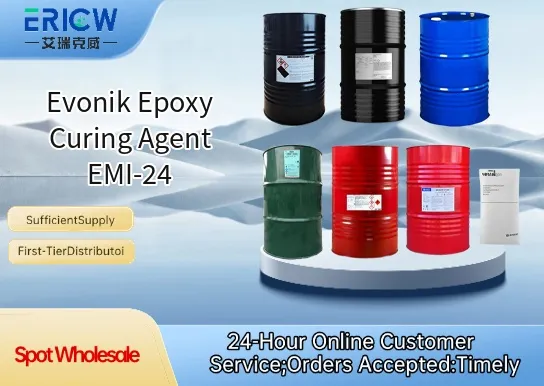
Highly efficient latent curing agent enabling extended pot life at room temperature.
Activates rapidly upon thermal stimulation (typically >100 °C), delivering fast gelation and full cure.
Excellent compatibility with standard DGEBA-type epoxy resins and low-viscosity formulations.
Halogen-free composition supporting modern regulatory requirements for electronics and industrial coatings.
Enables high glass transition temperature (Tg) and superior thermal stability in cured networks.
Electrically insulating encapsulants for power electronics and LED modules.
Potting compounds for automotive sensors and control units requiring reliable thermal cycling resistance.
Prepregs and laminates in high-performance printed circuit board (PCB) substrates.
Adhesives for structural bonding in aerospace and rail transportation components.
Coating systems for corrosion protection of metal substrates in demanding industrial environments.
| Chemical Type | Imidazole derivative (2-Ethyl-4-methylimidazole adduct) |
| Product Form | Off-white to light tan solid powder |
| Appearance | Free-flowing crystalline powder |
| Primary Applications | Latent curing agent for heat-curable epoxy systems |
| Key Features | Latency, thermal activation, halogen-free, low volatility |
| Benefits | Extended shelf life, precise process control, high Tg, RoHS-compliant |
| Storage Conditions | Store in original sealed container at 5–25 °C, protect from moisture |
| Handling Precautions | Use in well-ventilated areas; avoid inhalation of dust and skin contact |
Q1: What is the primary function of EMI-24 in epoxy systems?
A: EMI-24 is a latent imidazole-based curing agent designed to initiate epoxy polymerization at elevated temperatures. It enables precise control over pot life at ambient conditions and delivers rapid, efficient crosslinking during thermal cure cycles.
Q2: How does EMI-24 compare to other imidazole curing agents in terms of latency and reactivity?
A: EMI-24 offers enhanced latency compared to standard imidazoles, supporting extended shelf life and formulation stability at room temperature. Upon heating, it exhibits sharp, well-defined activation—typically initiating cure above 120 °C—with high catalytic efficiency and minimal volatiles.
Q3: Is EMI-24 compatible with common epoxy resins used in electronics encapsulation and adhesives?
A: Yes, EMI-24 demonstrates broad compatibility with diglycidyl ether of bisphenol-A (DGEBA), bisphenol-F epoxies, novolac epoxies, and multifunctional epoxy resins commonly employed in electronic encapsulants, underfills, and structural adhesives.
Q4: What are typical handling and storage recommendations for EMI-24?
A: Store in original sealed containers under dry, cool conditions (preferably below 25 °C and protected from moisture). Avoid prolonged exposure to humidity or elevated temperatures prior to use, as this may reduce latency. Standard industrial hygiene practices apply during handling.
Q5: Can EMI-24 be used in formulations requiring low ionic residue or high electrical insulation performance?
A: Yes—EMI-24 is non-ionic and leaves minimal ionic ash upon full cure, supporting excellent dielectric properties and reliability in high-performance electronic applications where low conductivity and long-term insulation integrity are critical.
Contact With Us:
E-mail: wangxingqiang@ericwchem.com
Have a Questions? Call Us:
Add:
Building A1, Jiete Industrial Park, Huangpu District, Guangzhou City, Guangdong Province, China