English
 Español
 tiếng việt
 русский
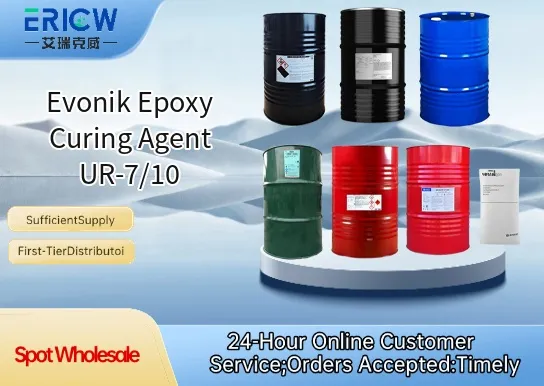
High reactivity with standard bisphenol-A and bisphenol-F epoxy resins.
Enables fast ambient-cure and low-energy thermal-cure profiles.
Delivers excellent chemical resistance and mechanical strength in cured networks.
Low viscosity for easy handling, metering, and homogeneous mixing.
Compatible with common epoxy formulation additives including fillers, pigments, and flexibilizers.
Structural adhesives for automotive and aerospace bonding.
Electrical encapsulation and potting compounds for power electronics.
High-performance coatings for industrial flooring and corrosion protection.
Composite matrix resins for wind blade and pultrusion applications.
Repair mortars and grouts requiring rapid strength development.
| Chemical Type | Aliphatic polyamine adduct |
| Product Form | Liquid |
| Appearance | Pale yellow to amber clear liquid |
| Viscosity (25 °C) | 300–600 mPa·s |
| Density (20 °C) | 0.94–0.98 g/cm³ |
| Amine Value | 220–250 mg KOH/g |
| Reactivity Profile | Fast ambient cure; full cure achievable at 25 °C in 24–48 h or at 60 °C in ≤4 h |
| Primary Applications | Adhesives, coatings, composites, encapsulants |
Q1: What is the primary function of UR-7/10 in epoxy systems?
A: UR-7/10 is a latent amine-based curing agent designed to provide controlled reactivity and extended pot life at ambient temperature, while enabling rapid and efficient crosslinking upon thermal activation—making it especially suitable for one-component (1K) epoxy formulations requiring storage stability and precise processing control.
Q2: Is UR-7/10 compatible with standard DGEBA-type epoxy resins?
A: Yes, UR-7/10 demonstrates broad compatibility with conventional bisphenol-A and bisphenol-F based liquid and solid epoxy resins, as well as many modified epoxy systems—including those used in powder coatings, adhesives, and encapsulation compounds.
Q3: How does UR-7/10 compare to traditional dicyandiamide (DICY) in terms of performance and handling?
A: Compared to DICY, UR-7/10 offers improved solubility in common epoxy resins, reduced dust generation during handling, and more consistent cure behavior with lower sensitivity to moisture—resulting in enhanced reproducibility and reduced risk of surface defects in high-performance applications.
Q4: What is the typical activation temperature range for full cure with UR-7/10?
A: Full network development typically occurs between 140 °C and 180 °C, depending on formulation composition, film thickness, and thermal profile. Lower temperatures may be sufficient for partial cure or tack-free development, while higher temperatures generally accelerate crosslink density build-up.
Contact With Us:
E-mail: wangxingqiang@ericwchem.com
Have a Questions? Call Us:
Add:
Building A1, Jiete Industrial Park, Huangpu District, Guangzhou City, Guangdong Province, China