English
 Español
 tiếng việt
 русский
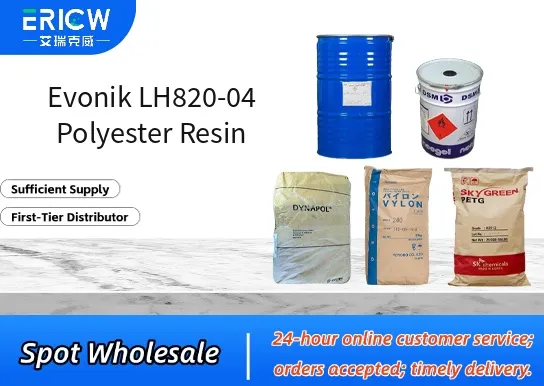
High reactivity with standard styrene monomers for rapid gelation and reduced cycle times.
Excellent mechanical strength and impact resistance in cured composites.
Good weathering stability and UV resistance for outdoor applications.
Low viscosity enabling easy handling, impregnation of fibrous reinforcements, and improved air release.
Consistent batch-to-batch reproducibility meeting stringent quality control standards.
Fiberglass-reinforced plastic (FRP) tanks and vessels for chemical storage.
Marine components including boat hulls, decks, and structural panels.
Transportation parts such as truck body panels and railway interior linings.
Construction elements like architectural cladding, grating, and roofing systems.
Industrial corrosion-resistant ducting and scrubber components.
| Chemical Type | Unsaturated polyester resin |
| Product Form | Liquid |
| Appearance | Clear to pale yellow viscous liquid |
| Primary Applications | Hand lay-up, spray-up, and filament winding processes |
| Key Features | Fast curing, high strength, low shrinkage |
| Recommended Styrene Content | 35–40 wt% (for optimal performance) |
| Storage Stability | ≥6 months at ≤25 °C in sealed containers |
| Compliance | REACH compliant; no SVHCs above threshold |
Q1: What is the primary function of LH820-04 in polyester-based coating and ink systems?
A: LH820-04 functions as a reactive co-resin or modifier that enhances crosslink density, improves hardness development, and contributes to better chemical resistance and substrate adhesion in unsaturated polyester and hybrid polyester-acrylic systems.
Q2: Is LH820-04 suitable for UV-curable formulations?
A: No — LH820-04 is a thermally reactive, styrene-containing unsaturated polyester resin and is not designed for free-radical UV curing. It is formulated for thermal crosslinking via peroxide initiators or co-reactive monomers in conventional baking processes.
Q3: How does LH820-04 differ from standard orthophthalic or isophthalic polyester resins?
A: LH820-04 features a tailored molecular architecture with balanced functionality and viscosity, optimized for improved flow and leveling in high-solids coatings while maintaining robust cure response and mechanical performance — distinguishing it from general-purpose polyesters used in casting or laminating applications.
Q4: Can LH820-04 be blended with epoxy or acrylic resins?
A: Yes — LH820-04 demonstrates good compatibility with select epoxy and acrylic co-resins in thermoset hybrid systems, provided formulation stability and cure kinetics are verified experimentally. Compatibility should be assessed case by case due to potential differences in reactivity and polarity.
Contact With Us:
E-mail: wangxingqiang@ericwchem.com
Have a Questions? Call Us:
Add:
Building A1, Jiete Industrial Park, Huangpu District, Guangzhou City, Guangdong Province, China