English
 Español
 tiếng việt
 русский
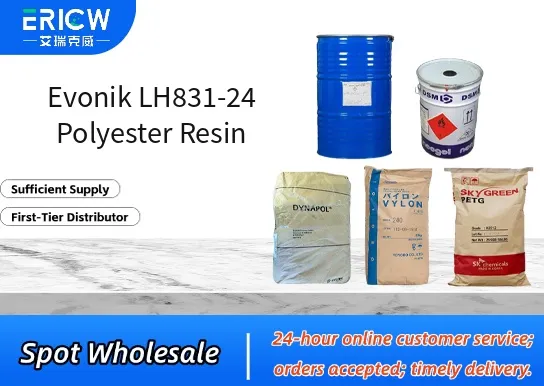
High reactivity enabling fast gel time and efficient production cycles.
Excellent mechanical strength and impact resistance in cured composites.
Good compatibility with standard styrene monomers and common accelerators.
Low viscosity for enhanced fiber wet-out and improved mold filling.
Consistent batch-to-batch performance supporting reliable industrial scale-up.
Fiberglass-reinforced plastic (FRP) tanks and vessels for chemical storage.
Pultruded profiles used in infrastructure, construction, and transportation.
Sheet molding compound (SMC) for automotive body panels and structural parts.
Marine components including decks, hulls, and interior fittings.
Industrial grating, ducting, and corrosion-resistant equipment housings.
| Chemical Type | Unsaturated polyester resin |
| Product Form | Liquid |
| Appearance | Clear to pale yellow viscous liquid |
| Primary Applications | FRP, pultrusion, SMC, and filament winding |
| Key Features | High reactivity, low viscosity, excellent mechanical properties |
| Benefits | Improved process efficiency, superior part quality, broad formulation flexibility |
| Styrene Content | Approx. 40–44 wt% |
| Storage Stability | 6 months at ≤25 °C in sealed containers |
Q1: What is the primary function of LH831-24 in polyester-based coatings and inks?
A: LH831-24 is a specialty polyester resin designed to act as a rheology modifier and film-forming aid. It enhances viscosity control, improves pigment suspension stability, and contributes to smooth film formation and gloss development in solvent-borne and high-solids polyester systems.
Q2: Is LH831-24 compatible with common crosslinkers used in thermosetting polyester applications?
A: Yes, LH831-24 is formulated to be compatible with standard amino crosslinkers (e.g., melamine-formaldehyde resins) and isothermal curing agents used in coil coating, appliance, and general industrial polyester finishes. Compatibility should always be verified in the final formulation under intended processing conditions.
Q3: How should LH831-24 be incorporated into a formulation?
A: LH831-24 is typically added during the let-down or post-addition stage, after initial pigment dispersion. It dissolves readily in common aromatic and aliphatic solvents used in polyester systems. Good mechanical agitation is recommended to ensure uniform distribution and optimal performance.
Q4: Does LH831-24 impact the curing behavior or thermal stability of polyester coatings?
A: LH831-24 is thermally stable under standard polyester cure schedules (typically 140–200 °C). It does not interfere with crosslinking kinetics but may influence melt viscosity during film formation—contributing to improved flow and reduced orange peel without delaying full cure.
Contact With Us:
E-mail: wangxingqiang@ericwchem.com
Have a Questions? Call Us:
Add:
Building A1, Jiete Industrial Park, Huangpu District, Guangzhou City, Guangdong Province, China