English
 Español
 tiếng việt
 русский
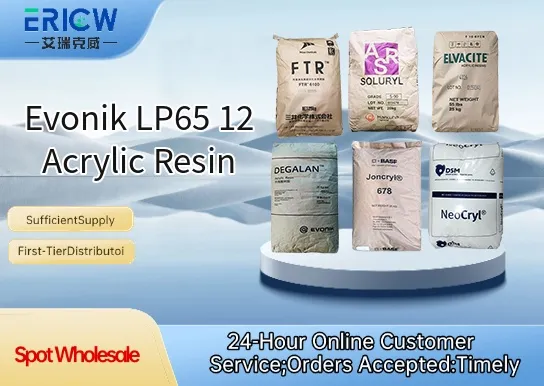
High solids content for reduced VOC emissions and improved formulation efficiency.
Excellent compatibility with nitrocellulose, alkyds, and other common resin systems.
Outstanding clarity and gloss retention in clearcoat and topcoat applications.
Good flow and leveling characteristics for smooth, defect-free film formation.
Enhanced weather resistance and UV stability for long-term outdoor performance.
Automotive refinish clearcoats and basecoats.
Industrial maintenance coatings for metal and plastic substrates.
Wood finishing systems including furniture and cabinetry coatings.
General-purpose protective coatings for architectural and OEM applications.
| Chemical Type | Acrylic copolymer |
| Product Form | Liquid solution (solvent-based) |
| Appearance | Clear, colorless to pale yellow liquid |
| Solvent System | Aromatic hydrocarbons / ester blend |
| Non-Volatile Content (wt%) | 64–66% |
| Viscosity (DIN 4, 23°C) | 10–14 s |
| Acid Value (mg KOH/g) | 8–12 |
| Weight-Average Molecular Weight (Mw) | ~12,000 g/mol |
Q1: What is the primary function of LP65 12 in coating formulations?
A: LP65 12 is a low-molecular-weight acrylic resin designed primarily as a rheology modifier and matting agent. It helps control viscosity, improve sag resistance, and deliver consistent, uniform matte finishes—especially in solvent-borne and high-solids architectural and industrial coatings.
Q2: Is LP65 12 compatible with common crosslinkers used in thermosetting systems?
A: Yes, LP65 12 exhibits good compatibility with melamine-formaldehyde and urea-formaldehyde resins, as well as with isocyanate-based curing agents in polyurethane systems. Its non-reactive backbone ensures stable dispersion without premature gelation under typical formulation conditions.
Q3: How should LP65 12 be incorporated into a coating formulation?
A: It is typically added during the let-down or post-addition stage, after pigment grinding, to avoid interference with dispersion stability. Good mechanical agitation is recommended for uniform incorporation. Pre-dilution in a compatible solvent may aid handling in high-viscosity systems.
Q4: Does LP65 12 affect film clarity or yellowing tendency?
A: LP65 12 maintains excellent clarity in clear coats and shows low inherent yellowing potential, making it suitable for applications where color stability and transparency are critical—such as clear wood finishes and premium decorative coatings.
Q5: What storage conditions are recommended for LP65 12?
A: Store in tightly sealed original containers at temperatures between 5 °C and 30 °C, away from direct sunlight and sources of ignition. Prolonged exposure to freezing temperatures or excessive heat should be avoided to preserve rheological performance and shelf life.
Contact With Us:
E-mail: wangxingqiang@ericwchem.com
Have a Questions? Call Us:
Add:
Building A1, Jiete Industrial Park, Huangpu District, Guangzhou City, Guangdong Province, China