English
 Español
 tiếng việt
 русский
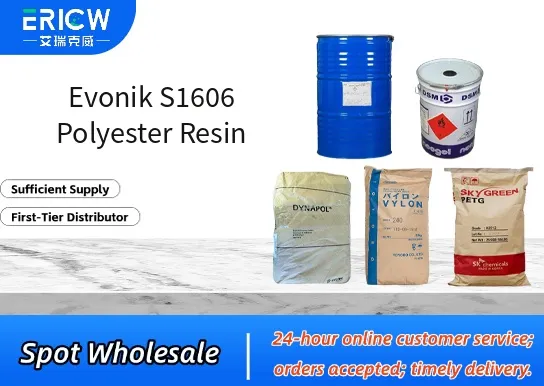
High reactivity with standard peroxide initiators for rapid gelation and efficient production cycles.
Excellent mechanical strength and impact resistance in cured composites.
Good weathering stability and UV resistance, suitable for outdoor applications.
Low viscosity enabling easy handling, fiber wet-out, and compatibility with various reinforcement materials.
Formulated for consistent batch-to-batch reproducibility and processing reliability.
Fiberglass-reinforced plastic (FRP) tanks and vessels for chemical storage.
Marine components including boat hulls, decks, and structural panels.
Automotive under-the-hood parts requiring thermal and chemical resistance.
Architectural cladding and façade elements exposed to environmental stress.
Industrial grating, walkways, and corrosion-resistant infrastructure.
| Chemical Type | Unsaturated orthophthalic polyester resin |
| Product Form | Liquid |
| Appearance | Clear to pale yellow viscous liquid |
| Primary Applications | FRP laminating, spray-up, and centrifugal casting |
| Key Features | Medium reactivity, balanced toughness and rigidity |
| Benefits | Reduced cycle time, improved surface finish, low styrene emission profile |
| Storage Stability | ≥6 months at ≤25 °C in original sealed container |
| Recommended Initiator | Methyl ethyl ketone peroxide (MEKP), 1–2 wt% typical |
Q1: What is the primary function of Evonik S1606 in polyester resin systems?
A: Evonik S1606 is a specialty polyester resin designed to act as a reactive modifier or co-resin, enhancing flexibility, impact resistance, and surface hardness in unsaturated polyester (UPE) formulations—particularly in gel coats and laminating resins for composites.
Q2: Is S1606 compatible with standard styrene-based unsaturated polyester resins?
A: Yes, S1606 is fully miscible with conventional styrenated UPE resins and does not require pre-dilution or special handling. It integrates homogeneously during standard mixing processes without phase separation or viscosity instability.
Q3: How does S1606 affect cure kinetics and post-cure properties?
A: S1606 maintains compatibility with common peroxide initiators (e.g., MEKP, BPO) and typically does not significantly delay gel time or demould time. Post-cure performance shows improved toughness and reduced microcracking tendency, especially under thermal cycling or mechanical stress.
Q4: Can S1606 be used in low-VOC or high-solids formulations?
A: Yes—S1606 has low inherent volatility and contributes to VOC reduction when partially replacing higher-styrene resins. Its molecular design supports formulation flexibility in both conventional and more environmentally aligned systems, though final compliance depends on the full formulation matrix.
Q5: What storage conditions are recommended for optimal shelf life?
A: Store in tightly sealed containers at temperatures between 5 °C and 30 °C, away from direct sunlight and strong oxidizers. Under these conditions, S1606 typically retains its reactivity and physical stability for up to 12 months from date of manufacture.
Contact With Us:
E-mail: wangxingqiang@ericwchem.com
Have a Questions? Call Us:
Add:
Building A1, Jiete Industrial Park, Huangpu District, Guangzhou City, Guangdong Province, China