English
 Español
 tiếng việt
 русский
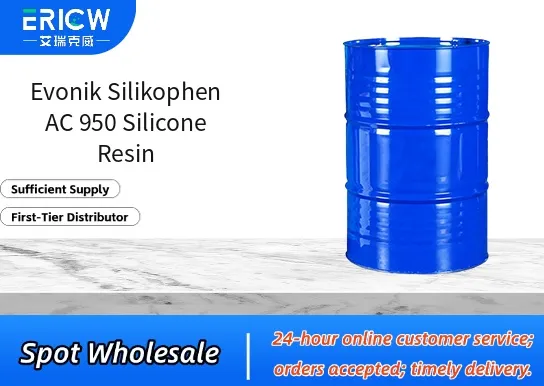
High thermal stability with continuous service temperature up to 250 °C.
Excellent electrical insulation properties even under humid and elevated temperature conditions.
Good compatibility with organic resins, enabling hybrid formulation development.
Low volatile content and low shrinkage upon curing, supporting dimensional stability in coatings and encapsulants.
Reactive functionality enables co-curing with epoxy, phenolic, and acrylic systems.
High-performance heat-resistant coatings for industrial exhaust systems and furnace components.
Electrical insulation varnishes for motors, transformers, and coil impregnation.
Matrix resin in composites for aerospace and power electronics housings.
Binders in high-temperature ceramic and refractory coatings.
Base resin for flame-retardant, low-smoke cable jacketing compounds.
| Chemical Type | Phenyl-methyl silicone resin (partially condensed) |
| Product Form | Clear to slightly hazy liquid |
| Appearance | Colorless to pale yellow viscous liquid |
| Solvent Content | Toluene/xylene mixture (approx. 60–65 wt%) |
| Viscosity (25 °C) | 800–1,200 mPa·s (Brookfield DV-II+ viscometer, spindle #3, 20 rpm) |
| Non-Volatile Content | 35–40 wt% |
| Reactive Groups | Si–OH and Si–OCH₃ (alkoxy-functional) |
| Primary Applications | Heat-resistant coatings, electrical insulation, hybrid polymer systems |
Q1: What is the primary function of Silikophen AC 950 in coating formulations?
A: Silikophen AC 950 is a solvent-borne methyl-phenyl silicone resin designed to enhance thermal stability, weather resistance, and surface hardness in high-performance organic coatings—particularly for metal substrates exposed to elevated temperatures or harsh environmental conditions.
Q2: Is Silikophen AC 950 compatible with common organic resins such as acrylics, alkyds, or polyesters?
A: Yes, it exhibits good compatibility with many thermosetting organic binder systems when properly blended—especially with melamine-formaldehyde, epoxy, and polyester resins. Compatibility testing under actual formulation conditions is recommended to ensure optimal phase behavior and film integrity.
Q3: How should Silikophen AC 950 be incorporated into a coating system?
A: It is typically added during the let-down stage using standard high-shear mixing equipment. Pre-dilution in compatible solvents (e.g., xylene, butyl acetate, or aromatic hydrocarbons) may improve dispersion. Avoid prolonged high-temperature processing before crosslinking to preserve reactivity.
Q4: Does Silikophen AC 950 require a catalyst for curing, and what are typical cure conditions?
A: It is designed for co-curing with conventional crosslinkers (e.g., melamine or phenolic resins) and generally benefits from acidic catalysts to accelerate condensation. Typical thermal cure profiles range from 140 °C to 220 °C, depending on substrate and formulation architecture—lower temperatures may suffice with extended dwell times or catalytic assistance.
Contact With Us:
E-mail: wangxingqiang@ericwchem.com
Have a Questions? Call Us:
Add:
Building A1, Jiete Industrial Park, Huangpu District, Guangzhou City, Guangdong Province, China