English
 Español
 tiếng việt
 русский
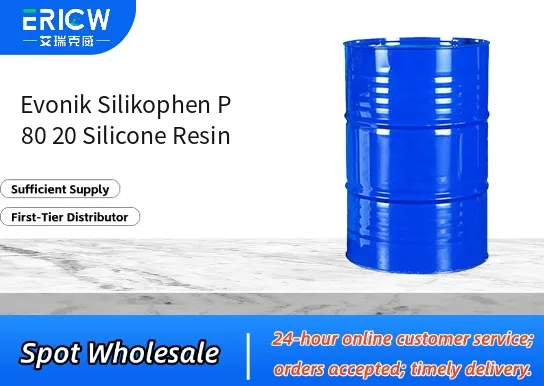
High thermal stability up to 250 °C continuous service temperature.
Excellent weathering and UV resistance for long-term outdoor performance.
Good compatibility with organic resins including acrylics, epoxies, and alkyds.
Low surface energy enabling superior water repellency and anti-graffiti properties.
Self-crosslinking capability without external catalysts under ambient or mild heat conditions.
High-performance industrial coatings for metal substrates.
Heat-resistant topcoats for exhaust systems and engine components.
Weatherable clear coats for architectural façade systems and cladding.
Hybrid silicone-acrylic binders in premium exterior wall paints.
Functional additives in fire-retardant and intumescent coating formulations.
| Chemical Type | Phenyl-modified silicone resin |
| Product Form | Liquid, solvent-based (xylene/toluene blend) |
| Appearance | Clear, colorless to pale yellow liquid |
| Solids Content | 80 ± 1 wt.% |
| Viscosity (25 °C) | 80–120 mPa·s (Brookfield DV-II+ viscometer, spindle #3, 60 rpm) |
| Density (20 °C) | 0.94–0.96 g/cm³ |
| VOC Content | Approx. 200 g/L |
| Primary Applications | Hybrid coatings, heat-resistant finishes, protective topcoats |
Q1: What is the primary function of Silikophen P 80 20 in coating formulations?
A: Silikophen P 80 20 is a phenyl-modified silicone resin designed to enhance surface hardness, thermal stability, and chemical resistance in high-performance organic-inorganic hybrid coatings—particularly for industrial and architectural applications requiring durable, low-gloss finishes.
Q2: Is Silikophen P 80 20 compatible with common organic resins such as acrylics, polyesters, or alkyds?
A: Yes, it exhibits good compatibility with a broad range of thermosetting and thermoplastic organic binders. It is typically incorporated via solvent blending or high-shear dispersion, and compatibility should be verified empirically under specific formulation conditions.
Q3: How does the phenyl content influence its performance compared to methyl-based silicone resins?
A: The elevated phenyl content improves compatibility with organic polymers, enhances refractive index for better clarity in transparent systems, and contributes to superior thermal stability and UV resistance—making it especially suitable for exterior and heat-resistant coatings.
Q4: What are typical handling and storage recommendations for this product?
A: Store in tightly sealed original containers at temperatures between 5 °C and 30 °C, away from direct sunlight and moisture. Avoid freezing. Prior to use, ensure thorough mixing to rehomogenize any settled material, as phase separation may occur during prolonged storage.
Contact With Us:
E-mail: wangxingqiang@ericwchem.com
Have a Questions? Call Us:
Add:
Building A1, Jiete Industrial Park, Huangpu District, Guangzhou City, Guangdong Province, China