English
 Español
 tiếng việt
 русский
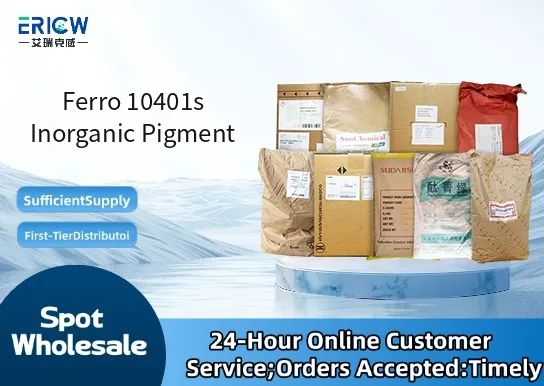
High thermal stability suitable for processing temperatures up to 1200°C.
Excellent lightfastness and weather resistance in demanding outdoor applications.
Low heavy metal content, compliant with global regulatory standards including RoHS and EN 71-3.
Consistent particle size distribution ensuring uniform dispersion and color reproducibility.
Chemically inert in alkaline and neutral environments, enhancing compatibility with cementitious and ceramic systems.
Coloration of architectural concrete and precast concrete elements.
Pigmentation of ceramic glazes and engobes for wall and floor tiles.
Staining agent in refractory mortars and high-temperature linings.
Permanent coloring in fired clay products including roofing tiles and bricks.
Functional pigment in heat-resistant coatings for industrial equipment.
| Chemical Type | Mixed-metal oxide (iron-chromium spinel) |
| Product Form | Fine dry powder |
| Appearance | Dark brown to black granular powder |
| Primary Applications | Ceramics, concrete, refractories, and architectural coatings |
| Key Features | Thermal stability, UV resistance, pH stability, low solubility |
| Benefits | Color consistency after firing, minimal batch-to-batch variation, non-fading performance |
| Storage Conditions | Store in cool, dry location; protect from moisture and direct sunlight |
| Regulatory Compliance | RoHS Directive 2011/65/EU, EN 71-3:2019, REACH SVHC-free |
Q1: What is the primary chemical composition of Ferro 10401s?
A: Ferro 10401s is a high-performance inorganic pigment based on a complex metal oxide system, engineered for thermal and chemical stability. Its exact formulation is proprietary, but it contains no heavy metals of concern under major global regulatory frameworks for industrial pigments.
Q2: Is Ferro 10401s suitable for use in polyolefin compounds exposed to high processing temperatures?
A: Yes — Ferro 10401s is specifically designed for high-temperature polymer processing, including extrusion and injection molding of polypropylene and polyethylene. It demonstrates excellent thermal stability up to typical melt processing ranges without significant color shift or degradation.
Q3: How does Ferro 10401s perform in UV-exposed outdoor applications?
A: This pigment exhibits strong inherent UV resistance due to its inorganic crystalline structure, making it well-suited for long-term outdoor use in applications such as automotive exterior trims, construction profiles, and agricultural films where color retention under sunlight is critical.
Q4: Can Ferro 10401s be used in food-contact plastics?
A: Ferro 10401s is not pre-approved for direct food-contact applications under FDA or EFSA regulations. Customers intending use in food-contact articles must conduct full regulatory evaluation, including migration testing and compliance verification with applicable regional requirements.
Q5: What is the recommended dispersion method for optimal color development?
A: For best results, Ferro 10401s should be incorporated using high-shear compounding — such as twin-screw extrusion — with appropriate carrier resin and dispersing aids. Pre-compounded masterbatches are also widely used to ensure uniform distribution and consistent hue intensity across production batches.
Contact With Us:
E-mail: wangxingqiang@ericwchem.com
Have a Questions? Call Us:
Add:
Building A1, Jiete Industrial Park, Huangpu District, Guangzhou City, Guangdong Province, China