English
 Español
 tiếng việt
 русский
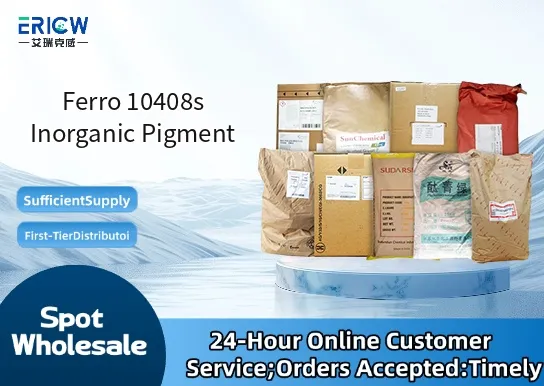
High thermal stability suitable for processing temperatures up to 1200°C.
Excellent chemical resistance to acids, alkalis, and solvents in demanding industrial environments.
Consistent batch-to-batch color reproducibility and particle size distribution.
Non-toxic formulation compliant with major global regulatory frameworks including REACH and RoHS.
Low oil absorption enabling efficient dispersion in ceramic glazes and refractory matrices.
Ceramic tile glazes requiring high-temperature stability and vivid chroma.
Sanitaryware and tableware decoration under fast-firing conditions.
Architectural cladding and façade tiles exposed to UV and weathering.
Refractory coatings for kiln furniture and heat-resistant linings.
Specialty glass coloration where minimal iron contamination is critical.
| Chemical Type | Mixed-metal oxide (Co-Cr-Al spinel-based) |
| Product Form | Fine dry powder |
| Appearance | Uniform dark blue-black granular powder |
| Primary Applications | Ceramic glazes, refractories, specialty glass |
| Key Features | High-temperature stability, acid/alkali resistance, low solubility |
| Benefits | Color consistency, reduced firing defects, extended kiln life |
| Storage Conditions | Store in cool, dry place; protect from moisture and direct sunlight |
| Shelf Life | 24 months from date of manufacture under recommended storage |
Q1: What is the primary chemical composition and pigment class of Ferro 10408s?
A: Ferro 10408s is a high-performance inorganic pigment based on a complex metal oxide system, formulated to deliver stable chromatic performance under thermal and UV exposure. It belongs to the class of mixed-metal oxide pigments, engineered for enhanced durability in demanding polymer and ceramic applications.
Q2: Is Ferro 10408s suitable for food-contact or pharmaceutical packaging applications?
A: Ferro 10408s is designed for industrial and decorative applications where regulatory compliance with food-contact standards is not required. It is not pre-qualified for direct food-contact use; customers intending such applications must conduct full regulatory evaluation—including extraction testing and compliance verification—per applicable regional requirements.
Q3: How does Ferro 10408s perform during high-temperature processing, such as injection molding or sintering?
A: This pigment exhibits excellent thermal stability and retains its color integrity at temperatures commonly encountered in polymer processing (up to approximately 300°C) and low-to-mid temperature ceramic firing cycles. Discoloration or decomposition is minimal under standard processing conditions when properly dispersed.
Q4: What are the recommended dispersion methods for optimal color development and consistency?
A: For best results, Ferro 10408s should be incorporated using high-shear mixing or twin-screw compounding to ensure uniform distribution. Pre-dispersion in a compatible carrier resin or solvent slurry may improve wetting and reduce agglomeration, especially in high-viscosity systems.
Q5: Can Ferro 10408s be used in aqueous coating systems?
A: While primarily optimized for thermoplastic and thermoset polymers, Ferro 10408s can be adapted for water-based coatings with appropriate surface treatment and dispersant selection. Performance—particularly gloss retention and long-term suspension stability—depends heavily on formulation design and pH compatibility.
Contact With Us:
E-mail: wangxingqiang@ericwchem.com
Have a Questions? Call Us:
Add:
Building A1, Jiete Industrial Park, Huangpu District, Guangzhou City, Guangdong Province, China