English
 Español
 tiếng việt
 русский
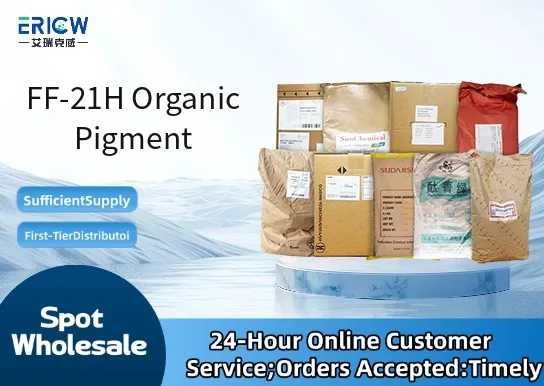
High chroma and excellent color strength for vibrant, consistent hue reproduction.
Outstanding thermal stability up to 280°C, suitable for high-temperature processing.
Good lightfastness (Grade 7–8 per ISO 105-B02) and weather resistance in outdoor applications.
Low volatile organic compound (VOC) content, compliant with stringent environmental regulations.
Excellent dispersibility in both polar and non-polar polymer matrices without requiring specialized surfactants.
Engineering plastics including polypropylene (PP), polyethylene (PE), and ABS.
Automotive interior components requiring long-term color stability and low outgassing.
High-performance industrial coatings for metal and plastic substrates.
Masterbatch formulations for injection molding and extrusion processes.
Consumer electronics housings where heat resistance and aesthetic precision are critical.
| Chemical Type | Quinacridone derivative |
| Product Form | Fine free-flowing powder |
| Appearance | Reddish-violet crystalline powder |
| Primary Applications | Plastics, coatings, masterbatches |
| Key Features | Thermally stable, high tinctorial strength, low migration |
| Benefits | Consistent batch-to-batch performance, reduced dosage requirement |
| Storage Conditions | Store in cool, dry, well-ventilated area away from direct sunlight |
| Regulatory Compliance | REACH registered; RoHS compliant; non-heavy-metal-based |
Q1: What are the key performance advantages of FF-21H compared to conventional red organic pigments?
A: FF-21H offers enhanced thermal stability and improved lightfastness in polymer melts, particularly under high-shear compounding conditions. Its molecular design supports superior dispersion behavior and reduced pigment agglomeration in thermoplastic matrices such as polyolefins and engineering resins.
Q2: Is FF-21H suitable for food-contact plastic applications?
A: FF-21H is formulated to meet general requirements for non-migrating colorants in polymeric food-contact materials. It is intended for use in applications where regulatory compliance is verified by the end-user’s qualified toxicological assessment and local regulatory framework — formal approval must be confirmed case-by-case per jurisdiction and substrate.
Q3: What is the typical dosage range for FF-21H in masterbatch applications?
A: Dosage depends on formulation requirements and desired shade intensity, but FF-21H is typically used at low concentrations due to its high tinctorial strength. In polyolefin masterbatches, loading generally ranges from 0.1% to 2% by weight, with optimal results achieved through standard dispersion protocols and melt-processing optimization.
Q4: How does FF-21H perform during high-temperature processing, such as injection molding of engineering plastics?
A: FF-21H demonstrates excellent thermal stability up to 280 °C for short residence times, making it suitable for processing engineering thermoplastics like polyamide and PBT. Color consistency is maintained without significant blooming or gas-phase volatilization under standard processing conditions.
Contact With Us:
E-mail: wangxingqiang@ericwchem.com
Have a Questions? Call Us:
Add:
Building A1, Jiete Industrial Park, Huangpu District, Guangzhou City, Guangdong Province, China