English
 Español
 tiếng việt
 русский
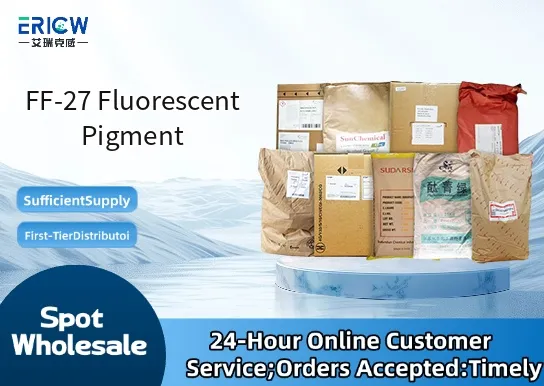
High-intensity fluorescence under UV-A (365 nm) and daylight exposure.
Excellent thermal stability up to 220°C, suitable for high-temperature processing.
Good compatibility with common organic resins including ABS, PS, and PVC.
Low migration tendency in polymer matrices, ensuring long-term color fidelity.
Non-toxic formulation compliant with REACH and RoHS directives.
Safety signage and emergency egress markings.
UV-responsive packaging for brand authentication and anti-counterfeiting.
Fluorescent inks for security printing and document verification.
High-visibility components in automotive interior trim.
Specialty coatings for sporting goods and outdoor equipment.
| Chemical Type | Organic fluorescent dye dispersed in polymeric carrier |
| Product Form | Free-flowing granular concentrate |
| Appearance | Yellow-orange granules with uniform particle size |
| Primary Applications | Polymer coloring, ink systems, and coating formulations |
| Key Features | UV-stable, non-bleeding, solvent-resistant |
| Recommended Loading Range | 0.2–1.5 wt% depending on substrate and opacity requirements |
| Storage Conditions | Keep in original sealed container at 15–25°C, away from direct sunlight |
| Shelf Life | 24 months from date of manufacture under recommended storage |
Q1: What types of resins and binders is FF-27 compatible with?
A: FF-27 demonstrates good compatibility with a wide range of thermoplastic and thermosetting systems, including acrylics, polyesters, PVC, ABS, polycarbonate, and epoxy-based coatings. Performance may vary depending on resin polarity and processing temperature—preliminary compatibility testing is recommended for critical applications.
Q2: How does FF-27 perform under UV exposure and outdoor weathering?
A: FF-27 offers enhanced photostability compared to conventional fluorescent pigments, particularly when incorporated into UV-stabilized matrices. While it is not inherently UV-resistant, its fluorescence retention improves significantly in formulations containing appropriate UV absorbers and HALS stabilizers. Long-term outdoor durability depends on film thickness, substrate, and environmental exposure conditions.
Q3: Can FF-27 be used in food-contact or pharmaceutical packaging applications?
A: FF-27 is not certified for direct food contact or pharmaceutical use. It is intended for industrial, decorative, and functional applications where regulatory compliance for ingestion or biological exposure is not required. Customers considering regulated end uses must conduct full regulatory due diligence and obtain appropriate third-party verification.
Q4: What is the recommended dispersion method for optimal fluorescence intensity?
A: For best results, FF-27 should be dispersed using high-shear mixing or three-roll milling in the base resin or vehicle. Avoid excessive heat or prolonged mechanical stress during dispersion, as this may reduce fluorescence efficiency. Pre-wetting with compatible solvents or dispersants can improve deagglomeration and uniform distribution.
Q5: Is FF-27 suitable for solvent-based or water-based systems?
A: FF-27 is formulated for compatibility with both solvent-based and water-based systems, though performance characteristics—including gloss, dispersion stability, and chroma—may differ. In aqueous systems, proper surfactant selection and pH control are essential to maintain colloidal stability and prevent pigment flocculation.
Contact With Us:
E-mail: wangxingqiang@ericwchem.com
Have a Questions? Call Us:
Add:
Building A1, Jiete Industrial Park, Huangpu District, Guangzhou City, Guangdong Province, China