English
 Español
 tiếng việt
 русский
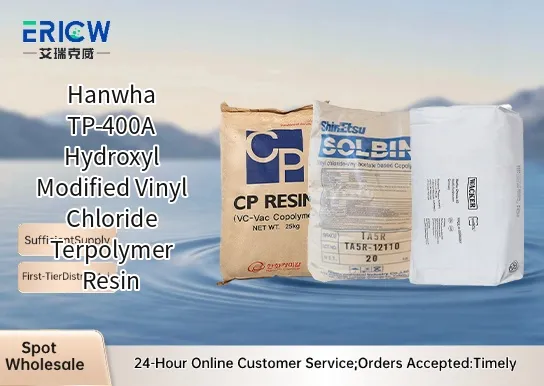
Enhanced compatibility with polyisocyanates and melamine-formaldehyde resins due to pendant hydroxyl functionality.
Improved adhesion to diverse substrates including metals, plastics, and primed surfaces.
Excellent chemical resistance to aliphatic solvents, weak acids, and alkalis in cured film systems.
Good thermal stability enabling use in medium-bake coating processes (120–140 °C).
Low viscosity in common organic solvents (e.g., xylene, butyl acetate), facilitating high-solids formulation.
Automotive OEM and refinish clearcoats and basecoats requiring flexibility and mar resistance.
Industrial maintenance coatings for metal furniture, agricultural equipment, and HVAC components.
Can and coil coatings where corrosion protection and substrate adhesion are critical.
Plastic coatings for automotive interior trim and consumer electronics housings.
Two-component polyurethane topcoats for architectural metal cladding and signage.
| Chemical Type | Hydroxyl-modified vinyl chloride terpolymer |
| Product Form | Free-flowing white to off-white granular solid |
| Appearance | Granules, free of visible impurities |
| Hydroxyl Value (mg KOH/g) | 18–22 |
| Gardner Color (10% in MEK) | ≤ 3 |
| Volatile Content (wt%, 105 °C, 2 h) | ≤ 0.5% |
| Particle Size (D90, μm) | ≤ 350 |
| Primary Applications | Crosslinkable binder in solventborne 2K PU and amino-cured coatings |
Contact With Us:
E-mail: wangxingqiang@ericwchem.com
Have a Questions? Call Us:
Add:
Building A1, Jiete Industrial Park, Huangpu District, Guangzhou City, Guangdong Province, China