English
 Español
 tiếng việt
 русский
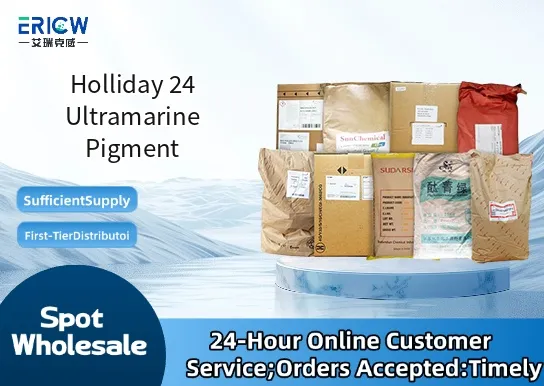
High chroma, intense blue hue with excellent lightfastness and weather resistance.
Exceptional thermal stability—retains color integrity up to 250°C in polymer processing.
Low sulfate content ensures superior compatibility with alkaline systems and cementitious materials.
Non-toxic, heavy-metal-free formulation compliant with EN 71-3 and ASTM F963 safety standards.
Fine particle size distribution (D50 ≈ 8–12 µm) enables uniform dispersion and high tinting strength.
Architectural coatings and exterior masonry paints requiring fade-resistant blue tones.
Plastic coloration for polyolefins, PVC, and engineering thermoplastics in consumer goods.
Coloring of decorative concrete, terrazzo, and precast architectural elements.
Specialty inks for packaging and security printing where UV stability is critical.
Soap, detergent, and cosmetic-grade personal care products requiring pH-stable blue coloration.
| Chemical Type | Sodium aluminosilicate sulfur complex (Ultramarine Blue) |
| Product Form | Free-flowing dry powder |
| Appearance | Fine, homogeneous blue powder with violet undertone |
| Primary Applications | Coatings, plastics, construction materials, inks, personal care |
| Key Features | Alkali-stable, non-bleeding, low abrasivity, dispersible in water and organic media |
| Benefits | Enhanced batch-to-batch consistency, reduced filter clogging, improved gloss retention |
| pH Stability Range | 8.5 – 11.5 (optimal performance in alkaline environments) |
| VOC Content | Non-applicable (solvent-free dry pigment) |
Q1: What is the primary chemical composition of Holliday 24 Ultramarine Pigment?
A: Holliday 24 is a synthetic sodium aluminosilicate-based ultramarine pigment, stabilized with sulfur-containing species to deliver its characteristic intense blue hue. It does not contain heavy metals such as lead, cadmium, or chromium, and is formulated for compatibility in non-acidic systems.
Q2: Is Holliday 24 suitable for use in food-contact plastics or coatings?
A: Holliday 24 is not approved for direct food-contact applications under current global regulatory frameworks. It is intended for industrial and decorative uses where regulatory compliance for ingestion or migration is not required—such as architectural coatings, general-purpose plastics, and non-automotive inks.
Q3: How does Holliday 24 perform under acidic conditions?
A: Ultramarine pigments—including Holliday 24—are inherently sensitive to low pH environments. Exposure to acids may cause fading, discoloration (e.g., greenish or grayish tints), or complete loss of color strength. It should be avoided in formulations with pH below approximately 5.5, including acid-catalyzed resins or acidic cleaners.
Q4: What is the typical dosage range when using Holliday 24 in solvent-based industrial coatings?
A: Dosage depends on desired opacity, film thickness, and substrate contrast, but Holliday 24 is typically used at low concentrations—generally ranging from 0.1% to 2% by weight in the final coating formulation—to achieve strong chromatic performance without compromising dispersion stability or gloss.
Q5: Can Holliday 24 be safely mixed with other organic or inorganic pigments?
A: Holliday 24 is generally compatible with many common inorganic pigments (e.g., titanium dioxide, iron oxides) and select organic pigments in neutral or alkaline media. However, avoid blending with strongly acidic pigments or those containing reactive metal ions (e.g., certain azo pigments or copper phthalocyanines in unstable dispersions), as interactions may affect color consistency or dispersion integrity.
Contact With Us:
E-mail: wangxingqiang@ericwchem.com
Have a Questions? Call Us:
Add:
Building A1, Jiete Industrial Park, Huangpu District, Guangzhou City, Guangdong Province, China