English
 Español
 tiếng việt
 русский
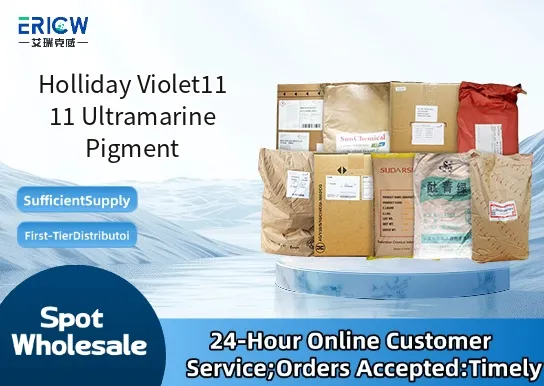
High chroma violet shade with exceptional color purity and brightness.
Excellent lightfastness and weather resistance for long-term outdoor performance.
Good thermal stability up to 180°C, suitable for medium-temperature processing.
Low water solubility and high alkali resistance, ensuring compatibility in cementitious and plaster systems.
Non-toxic, sulfate-free formulation compliant with major global pigment safety standards.
Architectural coatings and exterior wall paints.
Concrete, stucco, and dry-mix mortars.
Plastic coloration for rigid PVC and polyolefin applications.
Ceramic glazes and low-fire decorative tiles.
Artist-grade acrylic and gouache paints requiring lightfast violet tones.
| Chemical Type | Sodium aluminosilicate sulfur complex |
| Product Form | Fine free-flowing powder |
| Appearance | Violet-blue crystalline powder |
| Primary Applications | Coatings, construction materials, plastics, ceramics |
| Key Features | Lightfast, alkali-stable, non-bleeding, low migration |
| Benefits | Consistent batch-to-batch color, easy dispersion, low dust generation |
| pH Stability Range | 5.0–12.0 |
| Specific Surface Area | 18–22 m²/g (BET) |
Q1: What is the primary chemical composition of Holliday Violet11 11 Ultramarine Pigment?
A: Holliday Violet11 11 is a synthetic ultramarine pigment based on a sodium aluminosilicate matrix with polysulfide chromophores, delivering its characteristic violet hue through sulfur-based color centers within the crystalline lattice.
Q2: Is this pigment suitable for use in high-pH applications such as cementitious or alkaline coatings?
A: Yes — Holliday Violet11 11 exhibits excellent alkali resistance and is specifically formulated for stable performance in high-pH environments, including architectural plasters, concrete stains, and alkaline-cured industrial coatings.
Q3: How does Holliday Violet11 11 perform under UV exposure and outdoor weathering?
A: As an inorganic ultramarine, it offers good inherent UV stability and retains color integrity under typical outdoor exposure conditions; however, prolonged direct UV irradiation may lead to gradual fading in some formulations — stabilization via compatible binders or co-pigmentation is recommended for long-term exterior applications.
Q4: Can Holliday Violet11 11 be used in water-based systems without dispersion additives?
A: While inherently hydrophilic due to its sodium content, optimal dispersion and color development in aqueous systems typically require standard wetting agents or polymeric dispersants to prevent agglomeration and ensure uniform tinting strength.
Q5: What is the typical dosage range when incorporating this pigment into polymer compounds or coatings?
A: Dosage depends on the desired shade intensity and substrate opacity, but it is generally used at low concentrations — typically ranging from 0.1% to 2% by weight in most thermoplastic, thermoset, and liquid coating applications.
Contact With Us:
E-mail: wangxingqiang@ericwchem.com
Have a Questions? Call Us:
Add:
Building A1, Jiete Industrial Park, Huangpu District, Guangzhou City, Guangdong Province, China