English
 Español
 tiếng việt
 русский
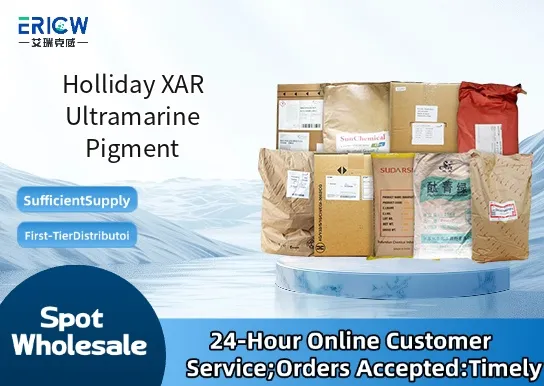
Exceptional lightfastness and weather resistance for long-term color stability.
High tinctorial strength with excellent dispersion characteristics in aqueous and solvent-based systems.
Non-toxic, sulfate-free formulation compliant with global regulatory standards including EN 71-3 and ASTM F963.
Thermally stable up to 250°C, retaining vivid blue hue under moderate processing conditions.
Low oil absorption ensures efficient pigment loading and improved rheology control in coatings and plastics.
Architectural and industrial waterborne coatings requiring clean, bright blue tones.
Plastic coloration for polyolefins, ABS, and PVC in consumer goods and packaging.
Printing inks for high-gloss offset, flexographic, and gravure applications.
Soap, detergent, and cosmetic formulations where pH stability and non-staining properties are critical.
Artist-grade acrylics and gouache paints demanding archival performance and batch-to-batch consistency.
| Chemical Type | Sodium aluminosilicate sulfur complex (synthetic ultramarine) |
| Product Form | Fine dry powder |
| Appearance | Brilliant blue to violet-blue free-flowing powder |
| Primary Applications | Coatings, plastics, inks, personal care, art materials |
| Key Features | Lightfast, alkali-stable, non-bleeding, low heavy metal content |
| Particle Size (D50) | 8–12 µm (laser diffraction) |
| pH (10% aqueous slurry) | 8.5–9.5 |
| Volatile Matter (105°C, 2 h) | ≤ 5.0 wt% |
Q1: What is the primary chemical composition of Holliday XAR Ultramarine Pigment?
A: Holliday XAR Ultramarine Pigment is a synthetic inorganic pigment based on the sodalite structure, composed primarily of sodium aluminosilicate with sulfur-containing chromophores responsible for its intense blue to violet hues.
Q2: Is Holliday XAR Ultramarine Pigment suitable for use in acid-sensitive applications such as certain coatings or adhesives?
A: No — ultramarine pigments are inherently alkaline and susceptible to degradation in acidic environments. They are not recommended for formulations with pH below approximately 5.0, including acid-catalyzed systems or highly acidic substrates.
Q3: How does Holliday XAR Ultramarine Pigment perform under UV exposure and elevated temperatures?
A: Holliday XAR offers good thermal stability up to typical processing temperatures used in powder coating and thermoset curing, but prolonged UV exposure may cause gradual fading due to photochemical reduction of polysulfide species. For outdoor applications, it is often recommended in combination with UV-stabilized binders or protective topcoats.
Q4: Can Holliday XAR Ultramarine Pigment be dispersed in water-based systems?
A: Yes — Holliday XAR is compatible with aqueous dispersions when properly stabilized using appropriate surfactants or dispersing agents. However, dispersion efficiency and long-term colloidal stability depend on system pH, ionic strength, and the choice of stabilizer.
Q5: What is the typical dosage range for Holliday XAR Ultramarine Pigment in industrial coating formulations?
A: Dosage depends on the desired color strength and opacity, but it is typically used at low concentrations — generally ranging from 0.1% to 2% by weight of the total formulation — with optimal results achieved through application-specific optimization.
Contact With Us:
E-mail: wangxingqiang@ericwchem.com
Have a Questions? Call Us:
Add:
Building A1, Jiete Industrial Park, Huangpu District, Guangzhou City, Guangdong Province, China