English
 Español
 tiếng việt
 русский
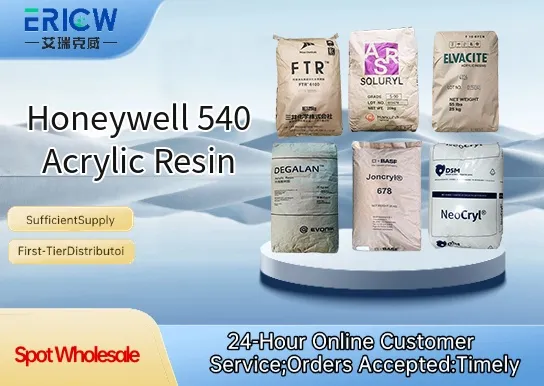
High-gloss, durable film formation for superior surface aesthetics.
Excellent UV resistance and long-term color stability in outdoor exposure.
Good compatibility with common solvents, plasticizers, and other acrylic resins.
Low viscosity in solution, enabling easy handling and efficient coating formulation.
Consistent batch-to-batch performance supported by rigorous quality control.
Automotive clearcoats and OEM topcoats.
Industrial maintenance coatings for metal and concrete substrates.
Architectural exterior paints requiring weatherability and gloss retention.
Plastic coatings for ABS, PC, and PVC substrates.
High-performance inks for flexible packaging and labels.
| Chemical Type | Thermoplastic acrylic copolymer |
| Product Form | Free-flowing granular solid |
| Appearance | White to off-white pellets |
| Primary Applications | Coatings, inks, adhesives |
| Key Features | Gloss retention, UV stability, solvent solubility |
| Benefits | Enhanced durability, formulation flexibility, consistent film integrity |
| Solubility | Soluble in esters, ketones, aromatic hydrocarbons, and chlorinated solvents |
| Storage Conditions | Store in cool, dry place below 30°C; protect from moisture and direct sunlight |
Q1: What is the primary function of Honeywell 540 Acrylic Resin in coating and ink formulations?
A: Honeywell 540 Acrylic Resin serves as a high-performance binder and rheology modifier, enhancing film formation, gloss, scratch resistance, and pigment dispersion stability in water-based and solvent-borne systems.
Q2: Is Honeywell 540 compatible with common industrial resins and additives?
A: Yes, it demonstrates broad compatibility with acrylic emulsions, polyurethane dispersions, cellulose derivatives, and conventional surfactants—though compatibility testing under specific formulation conditions is recommended prior to full-scale use.
Q3: How should Honeywell 540 be incorporated into a formulation?
A: It is typically added during the let-down or post-addition stage under moderate agitation. Pre-dilution with water or co-solvent may aid uniform dispersion, especially in high-solids or low-shear systems.
Q4: Does Honeywell 540 contribute to regulatory compliance for food-contact or industrial coatings?
A: While Honeywell 540 is designed for use in applications requiring low volatility and good hydrolytic stability, final regulatory suitability depends on the complete formulation, processing conditions, and applicable jurisdictional requirements—formulators must conduct appropriate migration and safety assessments.
Q5: What storage conditions are recommended to maintain product stability?
A: Store in original sealed containers at temperatures between 5 °C and 30 °C, away from freezing and prolonged exposure to direct sunlight or excessive heat to preserve viscosity and colloidal integrity.
Contact With Us:
E-mail: wangxingqiang@ericwchem.com
Have a Questions? Call Us:
Add:
Building A1, Jiete Industrial Park, Huangpu District, Guangzhou City, Guangdong Province, China