English
 Español
 tiếng việt
 русский
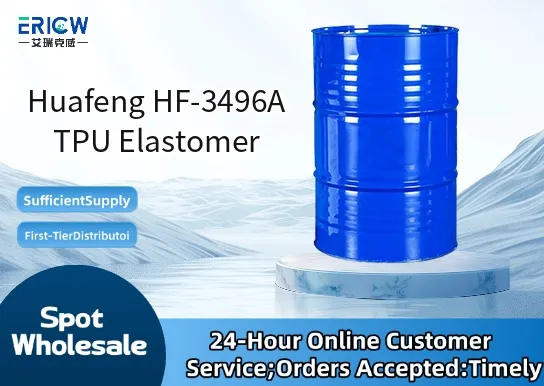
Excellent abrasion resistance for demanding mechanical service conditions.
High tensile strength and elongation at break, ensuring robust performance under dynamic stress.
Good low-temperature flexibility down to –30 °C without significant loss of elasticity.
Outstanding oil and grease resistance, suitable for contact with hydrocarbon-based fluids.
Compatible with common thermoplastic processing methods including extrusion, injection molding, and calendering.
Industrial hoses and pneumatic tubing requiring high pressure and flex fatigue resistance.
Automotive interior trim components, including gear shift boots and instrument panel seals.
Conveyor belts and drive belts in material handling systems.
Footwear midsoles and outsoles demanding rebound resilience and wear durability.
Medical device tubing and non-implantable fluid-handling components (USP Class VI compliant formulation).
| Chemical Type | Aliphatic polyester-based thermoplastic polyurethane |
| Product Form | Pellets |
| Appearance | Off-white to light yellow translucent granules |
| Density (g/cm³) | 1.18–1.22 |
| Melt Flow Index (210 °C/5 kg, g/10 min) | 10–14 |
| Shore A Hardness | 94–96 |
| Tensile Strength (MPa) | 42–48 |
| Elongation at Break (%) | 550–620 |
Q1: What are the key processing advantages of HF-3496A compared to conventional TPU grades?
A: HF-3496A offers enhanced melt flow stability and reduced viscosity sensitivity during extrusion and injection molding, enabling smoother processing at lower shear rates and improved surface finish in thin-walled or complex geometries.
Q2: Is HF-3496A suitable for applications requiring high abrasion resistance and flexibility at low temperatures?
A: Yes — as a thermoplastic polyurethane elastomer with balanced hard-segment content, HF-3496A delivers excellent abrasion resistance and retains good elasticity and impact resilience down to approximately −30 °C, making it well-suited for dynamic outdoor and automotive components.
Q3: Can HF-3496A be co-extruded or overmolded with common engineering plastics like ABS, PC, or PP?
A: HF-3496A demonstrates good interfacial adhesion with several polar engineering thermoplastics such as ABS and PC when processed under optimized temperature and residence time conditions; compatibility with non-polar substrates like PP typically requires surface pretreatment or use of a tie-layer.
Q4: How should HF-3496A be dried prior to processing?
A: To ensure optimal mechanical performance and avoid splay or voids, HF-3496A should be thoroughly dried using desiccant-assisted hot air drying at 80–90 °C for a minimum of 3–4 hours, with moisture content maintained below 0.05% before processing.
Contact With Us:
E-mail: wangxingqiang@ericwchem.com
Have a Questions? Call Us:
Add:
Building A1, Jiete Industrial Park, Huangpu District, Guangzhou City, Guangdong Province, China