English
 Español
 tiếng việt
 русский
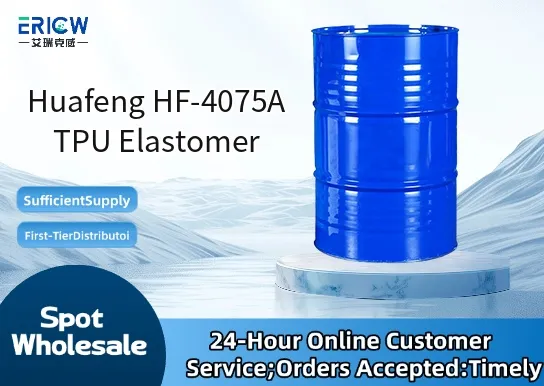
Excellent abrasion resistance for extended service life in demanding mechanical environments.
Outstanding flexibility and low-temperature toughness down to –30 °C.
Good oil, grease, and hydrocarbon resistance suitable for industrial and automotive components.
High transparency and excellent clarity retention after processing and aging.
Compatible with common thermoplastic processing methods including extrusion, injection molding, and calendering.
Transparent protective films for electronic displays and touch panels.
Flexible tubing and fluid-handling components in medical and analytical equipment.
Soft-touch grips and overmolded handles for power tools and consumer appliances.
Seals, gaskets, and dynamic sealing elements in pneumatic systems.
Wear-resistant footwear components such as midsoles and outsole overlays.
| Chemical Type | Aliphatic polyester-based thermoplastic polyurethane |
| Product Form | Pellets |
| Appearance | Translucent, off-white to light amber granules |
| Hardness (Shore A) | 75 ± 2 |
| Melt Flow Index (210 °C/5 kg) | 12–16 g/10 min |
| Density | 1.18–1.20 g/cm³ |
| Processing Temperature Range | 180–220 °C |
| Key Features | Transparency, low-temperature flexibility, hydrolysis resistance |
Q1: What are the key processing advantages of HF-4075A compared to conventional TPU grades?
A: HF-4075A offers enhanced melt flow stability and reduced viscosity sensitivity during extrusion and injection molding, enabling smoother processing at lower shear rates and improved surface finish in thin-walled or highly detailed parts.
Q2: Is HF-4075A suitable for applications requiring resistance to hydrolysis and low-temperature flexibility?
A: Yes — as an aliphatic polyester-based TPU, HF-4075A delivers balanced hydrolytic stability and retains excellent elasticity down to -30 °C, making it well-suited for outdoor, automotive, and flexible industrial components exposed to moisture and thermal cycling.
Q3: Can HF-4075A be blended with other thermoplastics or elastomers?
A: HF-4075A demonstrates good compatibility with common engineering thermoplastics such as PC, ABS, and certain polyesters when used as a compatibilizer or impact modifier; however, blend formulations should be validated for phase morphology and mechanical performance under intended service conditions.
Q4: What drying conditions are recommended prior to processing?
A: To ensure optimal melt integrity and minimize surface defects, HF-4075A should be dried at 80–90 °C for 3–4 hours using a desiccant dryer, with residual moisture maintained below 0.02% w/w before processing.
Contact With Us:
E-mail: wangxingqiang@ericwchem.com
Have a Questions? Call Us:
Add:
Building A1, Jiete Industrial Park, Huangpu District, Guangzhou City, Guangdong Province, China