English
 Español
 tiếng việt
 русский
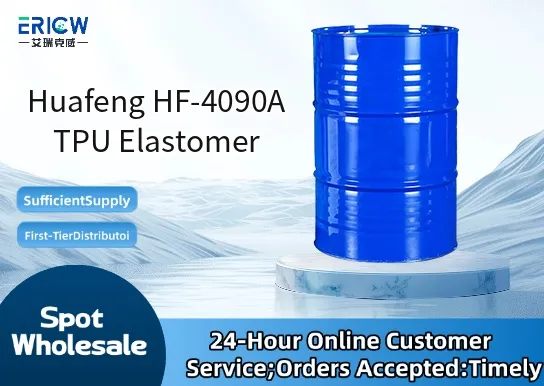
Excellent abrasion resistance for extended service life in demanding mechanical environments.
Superior elasticity and recovery performance with low permanent set after repeated deformation.
Good processability via extrusion, injection molding, and blow molding without thermal degradation.
Outstanding oil and grease resistance, maintaining dimensional stability in lubricated conditions.
Hydrolysis-resistant formulation suitable for humid or wet-service applications.
Automotive interior trim components including instrument panel skins and door armrests.
Industrial hoses and pneumatic tubing requiring flexibility and pressure retention.
Consumer electronics protective casings and wearable device straps.
Medical tubing and non-implantable fluid-handling components compliant with ISO 10993-5.
High-performance footwear midsoles and outsoles for athletic and work footwear.
| Chemical Type | Aliphatic polyester-based thermoplastic polyurethane |
| Product Form | Natural granules, free-flowing, dry-blend ready |
| Appearance | Off-white to light beige translucent pellets |
| Density (g/cm³) | 1.18–1.22 (ASTM D792) |
| Melt Flow Index (g/10 min) | 12–16 (210 °C / 2.16 kg, ASTM D1238) |
| Hardness (Shore A) | 90 ± 2 (ASTM D2240) |
| Tensile Strength (MPa) | 38–42 (ASTM D412) |
| Elongation at Break (%) | 480–520 (ASTM D412) |
Q1: What are the key processing advantages of HF-4090A compared to conventional TPU grades?
A: HF-4090A offers enhanced melt flow stability and reduced torque demand during extrusion and injection molding, enabling smoother processing at moderate temperatures. Its balanced hardness and low melt viscosity support consistent thin-wall part formation and improved surface finish without excessive thermal degradation.
Q2: Is HF-4090A suitable for applications requiring abrasion resistance and flexibility over a wide temperature range?
A: Yes — HF-4090A is formulated to deliver excellent dynamic flex fatigue resistance and retains elasticity well below 0 °C while maintaining dimensional stability up to approximately 70 °C. It is commonly selected for demanding applications such as high-performance automotive trim, wearable device housings, and industrial rollers where both toughness and low-temperature resilience are critical.
Q3: How should HF-4090A be dried prior to processing?
A: As with most hygroscopic thermoplastic polyurethanes, HF-4090A must be thoroughly dried before processing to prevent hydrolysis and surface defects. A recommended drying condition is 80–90 °C for 3–4 hours in a desiccant dryer, achieving a moisture content below 0.05% by weight. Always verify residual moisture using a reliable Karl Fischer titrator when consistency is critical.
Q4: Can HF-4090A be blended or alloyed with other polymers?
A: HF-4090A demonstrates good compatibility with certain engineering thermoplastics such as PC and ABS, particularly when used as an impact modifier or soft-segment component in thermoplastic elastomer blends. Compatibility testing — including rheological evaluation and morphology analysis — is strongly advised before full-scale formulation development.
Contact With Us:
E-mail: wangxingqiang@ericwchem.com
Have a Questions? Call Us:
Add:
Building A1, Jiete Industrial Park, Huangpu District, Guangzhou City, Guangdong Province, China